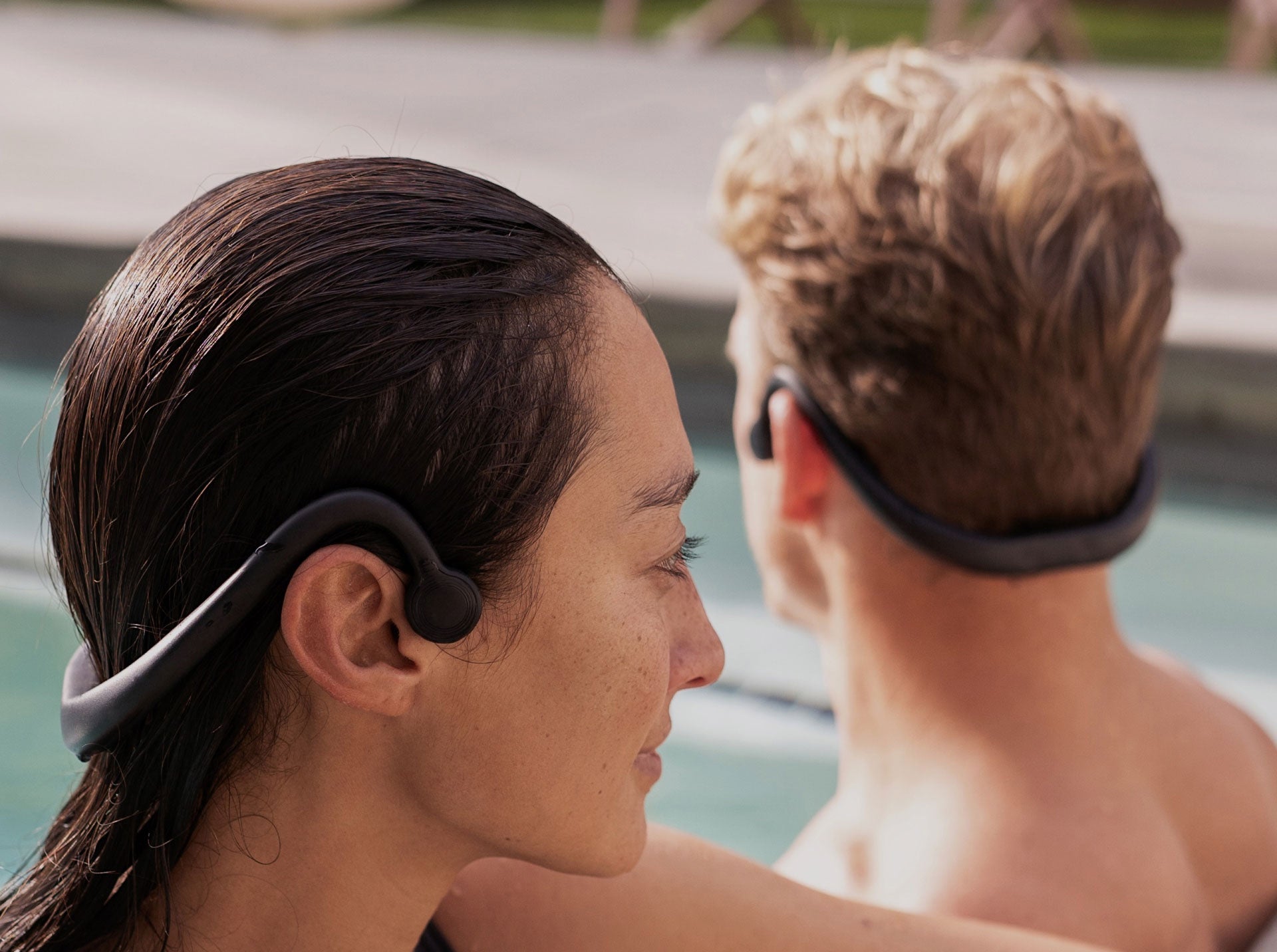

Waterproof headphones make it possible to train with music, coaching, and live feedback, even in saltwater. To maximize the lifespan of your waterproof headphones, it’s important to take care of your gear. Rinsing headphones immediately after a saltwater swim is one of the ways you can protect your beloved waterproof headphones.
Salt is more corrosive than fresh or chlorinated water, which means durability, waterproof ratings, and maintenance matter more. Below, we break down what saltwater means for your swim headphones and how to protect your gear.
What Makes a Pool a “Saltwater Pool?”
When you think of a saltwater pool, you may think of ocean water in a pool – but that’s not the case. Saltwater pools use a salt chlorine generator to convert dissolved salt into chlorine. The salt concentration is much lower than seawater — typically about 3,000–3,500 parts per million (ppm), compared to roughly 35,000 ppm in the ocean. Saltwater found in a pool still contains chlorine and dissolved salt that can leave residue on headphones. While gentler on swimmers' eyes and skin, saltwater can be tougher on electronics over time if they aren’t properly sealed and maintained.
Are Waterproof Headphones Safe to Use in Saltwater?
Yes, waterproof headphones are safe to use in saltwater pools. However, salt introduces an additional variable: corrosion.
Even though saltwater pools are less concentrated than the ocean, salt crystals can accumulate in charging ports, corrode metal components that are exposed, degrade seals, and leave behind residue that can interfere with performance. High-quality swim headphones are designed to handle regular pool use, but saltwater swimmers should be slightly more diligent about care – a topic we will cover in just a little bit.
Understanding Waterproof Ratings (IPX) for Saltwater Use
When evaluating waterproof headphones, you’ll see an IP rating, typically something like IPX7 or IPX8.
-
IPX7: Protected against temporary immersion (up to 1 meter for 30 minutes)
-
IPX8: Protected against continuous immersion beyond 1 meter (manufacturer-defined depth/time)
For swimmers, IPX8 is generally preferred, especially for frequent underwater use. As you shop for a quality pair of waterproof headphones, it’s important to note that these ratings test water resistance and don’t reflect long-term corrosion resulting from saltwater. If you plan to swim in saltwater with headphones, shop for quality waterproof headphones with sealed charging systems like ours and practice religious rinsing after every swim.
Common Problems Saltwater Can Cause for Swim Headphones
Saltwater doesn’t usually cause immediate failure — it causes gradual wear.
- Corrosion of metal components
- Seal degradation
- Audio distortion
- Charging issues
Most of these problems are preventable with simple after-swim care.

How to Protect Waterproof Headphones in Saltwater Pools
If you swim in a saltwater pool regularly, add this 60-second routine to maximize the performance and lifespan of your waterproof headphones.
- Rinse immediately with fresh water: Gently rinse headphones under tap water after every swim.
- Pat dry with a soft towel: Avoid leaving saltwater to air-dry on the device.
- Air dry fully before charging: Moisture + electricity = damage risk.
- Inspect charging contacts: Look for white salt residue buildup and wipe gently if needed.
Do Waterproof Headphones Perform Differently in Saltwater?
From a sound standpoint, most swimmers won’t notice a major difference between saltwater and traditional chlorine pools. However, if you do notice a difference, it can be due to the fact that saltwater is slightly more dense than freshwater, which can subtly change how sound waves travel. In practice, this difference is minimal — especially with bone conduction swim headphones, which transmit sound through cheekbones rather than relying on traditional speakers pushing sound through water. Performance differences are far less significant than maintenance considerations.
What to Look for in Waterproof Headphones for Saltwater Swimming
If you swim primarily in a saltwater pool, prioritize the following when shopping for waterproof headphones.
- IPX8 waterproof rating (full submersion)
- Sealed magnetic charging system to reduce exposure and corrosion
- Durable materials such as reinforced seals
- Designed for real swim training…underwater

Are Zygo Headphones Safe for Saltwater Pools?
Zygo headphones are designed for frequent swim training — including use in real-world pool environments, freshwater, and saltwater. Our waterproof headphones feature sealed components for durability and are engineered specifically for swimmers and full submersion. Like any electronic device, Zygo benefits from fresh water rinsing after salt exposure. With proper care, they’re built to handle consistent pool training — whether chlorine or salt-generated. For swimmers who train multiple days per week, durability and maintenance habits matter more than the type of pool itself.
Waterproof Headphones Can Work in Saltwater
With awareness and a simple care routine, you can dive into that saltwater pool and its advantages with your waterproof headphones on. Good news, because once you use waterproof headphones, you won’t want to go back. Before diving into any pool, check the waterproof rating of the headphones and verify they are designed for full submersion swimming. For saltwater swims, quickly practice your after-swim care routine maintenance to extend the lifespan of your headphones.
If you train regularly and want structured workouts, music, or coaching underwater, waterproof swim headphones remain a reliable option — even in saltwater environments. If you’re looking for a swim-specific system built for real training sessions, Zygo was created to keep swimmers connected to coaching and audio — without sacrificing durability in the pool.
Take the plunge with your volume all the way up… shop Zygo today!
FAQs
Can you use waterproof headphones in a saltwater pool?
Yes. Waterproof headphones can be used in saltwater pools as long as they are designed for full submersion and regular swim use. For frequent saltwater swimming, look for swim headphones with a strong waterproof rating, durable seals, and a design built for pool training.
Are saltwater pools bad for waterproof headphones?
Saltwater pools are not automatically bad for waterproof headphones, but salt can be more corrosive than fresh or chlorinated water. Over time, salt residue may affect charging contacts, seals, or exposed components if the headphones are not rinsed and dried properly after each swim.
What waterproof rating should swim headphones have for saltwater use?
For swimming, an IPX8 waterproof rating is generally preferred because it indicates the headphones are designed for continuous submersion. However, waterproof ratings focus on water resistance, so proper maintenance is still important when using headphones in saltwater.
How do you care for waterproof headphones after swimming in saltwater?
After swimming in a saltwater pool, rinse your waterproof headphones with fresh water, gently pat them dry with a soft towel, and let them air dry completely before charging. You should also check charging contacts for salt residue and wipe them carefully if needed.
Do waterproof headphones sound different in saltwater?
Most swimmers will not notice a major difference in sound between saltwater pools and traditional chlorine pools. Saltwater is slightly denser than freshwater, but the performance difference is usually minimal, especially with bone conduction swim headphones.
Are bone conduction headphones good for saltwater swimming?
Yes. Bone conduction headphones can be a strong option for saltwater swimming because they do not rely on traditional earbuds sitting inside the ear canal. Instead, they transmit audio through vibrations near the cheekbones, which can improve comfort and stability during swim workouts.
Can Zygo headphones be used in saltwater pools?
Yes. Zygo waterproof headphones are designed for frequent swim training and can be used in saltwater pool environments. As with any swim headphones, rinsing them with fresh water after saltwater exposure helps protect performance and longevity.
Should I rinse my swim headphones after every saltwater swim?
Yes. Rinsing your headphones after every saltwater swim is one of the easiest ways to help prevent salt buildup, corrosion, and residue. A quick fresh water rinse, towel dry, and full air dry before charging can help extend the lifespan of your gear.
Can I stream music or coaching while swimming in saltwater?
Yes. With swim-specific waterproof headphones, you can listen to music, coaching, guided workouts, podcasts, and other audio while swimming in saltwater. Zygo uses underwater audio technology designed to keep swimmers connected during real pool training sessions.
What should I look for in waterproof headphones for saltwater pools?
Look for waterproof headphones with an IPX8 rating, a secure swim-specific fit, durable sealed components, reliable underwater audio, and an easy maintenance routine. If you train regularly, choose headphones built specifically for swimming rather than general waterproof earbuds.