
Lap swimming is one of the most effective full-body workouts—but it’s also one of the most isolated–that is until you take the plunge with waterproof headphones designed for swimming. Now you’ve got your favorite playlist motivating every stroke, performance tracking, and the option for a guided swim. Before you dive in with waterproof headphones you’ll want to be sure you have the right pair on that’s made for more than sweating or rain. Read on to learn more about the best headphones for lap swimming and how they work.
Why “Waterproof Headphones” Aren’t Enough for Swimming
Waterproof vs. Swim-Proof: What’s the Difference?
There are different ratings for waterproof headphones, and not all are designed for swimming. Many are built to withstand splashes, sweat, or even quick submersion—but not prolonged time underwater. IPX8 are the ideal ratings for waterproof headphones for swimming. These headphones are designed for submersion or swimming and are specifically engineered for repeated underwater use, including lap after lap in a pool environment. Without this level of durability, even “waterproof” devices can fail over time.
Bluetooth Doesn’t Work Well Underwater
One of the biggest frustrations swimmers face is losing connection the moment they submerge. That’s because Bluetooth signals don’t travel effectively through water. Even the best wireless earbuds rely on radio frequencies that quickly degrade underwater, leading to constant dropouts or complete disconnection. Our waterproof headphones for swimming feature a case that acts as a transmitter sending signals to the headphones while you’re swimming to maintain a reliable connection.
Fit and Stability Issues During Laps
Lap swimming involves continuous motion—flip turns, push-offs, and repetitive strokes. Standard earbuds, and even some waterproof headphones, aren’t designed to stay in place through that kind of movement. Without a secure, swim-specific fit, headphones can shift, leak, or fall out entirely, breaking your rhythm and focus.

Bone Conduction Technology
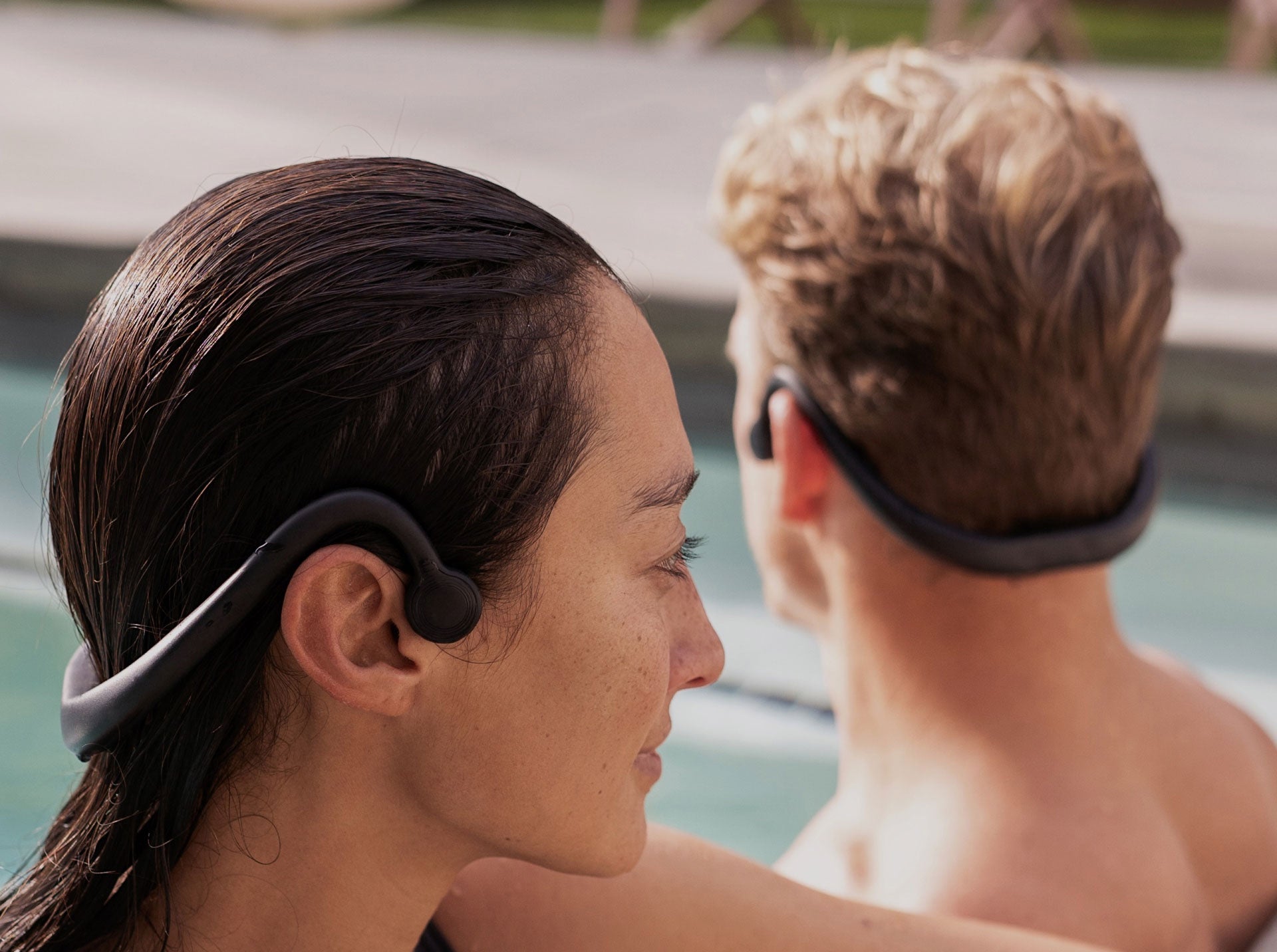
Bone conduction headphones have become a game-changer for swimmers. Instead of sending sound through the ear canal, they transmit audio through your cheekbones. This design keeps your ears open, improves comfort, and eliminates the need for earbuds that can trap water or fall out mid-lap. It’s also ideal for maintaining awareness of your surroundings in shared pool environments.
Dedicated Swim Audio Systems
Unlike general-purpose headphones, swim audio systems are built specifically for the demands of the water. These systems account for signal limitations, waterproofing, and fit—delivering a more consistent experience from start to finish.
Poolside Transmission vs Built-In Storage
The two main methods for poolside transmission are built-in MP3 storage and transmission systems.
-
Built-in MP3 storage: Upload music or workouts directly to your headphones. This avoids connectivity issues but limits flexibility.
-
Poolside transmission systems: Stream audio in real time from a transmitter placed near the pool. This allows for live coaching, playlists, and dynamic workouts without relying on Bluetooth.
Each approach solves the underwater connectivity problem in a different way—but both are far more effective than traditional wireless headphones.
Key Features to Look for in Lap Swimming Headphones
True Waterproof Rating (IPX8+)
For consistent performance, look for headphones with an IPX8 rating or higher. An IPX8 rating indicates that the headphones are rated to handle continuous submersion without damage. Once you’ve confirmed the rating, it’s time to focus on the details.
Secure, Goggles-Compatible Fit
A stable fit is critical to keep your focus on your workout. Our headphones are designed with superior comfort in mind fitting seamlessly under swim caps or paired with goggles. Put them on and take them off – they’ll stay where you put them.
Consistent Audio Without Dropouts
Whether using MP3 storage or a transmitter system, uninterrupted audio is essential. Dropouts can disrupt pacing and make workouts feel disjointed. Our waterproof headphones feature a transmitter case to support a reliable connection.
Battery Life for Full Swim Sessions
Swimmers need devices that last through long sets. Look for battery life that comfortably covers your entire workout—especially if you’re training for endurance. On a single charge our headphones can provide 2-3 hours of continuous use.
Ease of Use in the Water
Buttons and controls should be simple and responsive, even with wet hands. Complicated interfaces don’t translate well mid-swim.
Best Types of Headphones for Lap Swimming

Bone Conduction Swim Headphones
Bone conduction headphones leave the ear drum open and instead loop around the ear. To transmit sound they send sound vibrations through the cheekbones to the inner ear. These are widely considered the most comfortable, secure, and safest option.
MP3-Based Swim Headphones
While MP3-based swim headphones offer simplicity and freedom from devices, the connectivity of transmitter-based devices is typically superior. Headphones with MP3-based storage utilize internal storage to stream from.
Streaming Systems With Transmitters
Waterproof headphones with transmitters offer superior connectivity and are preferred for real-time streaming as they connect to your mobile device. The transmitter sends signals to maintain a strong connection even underwater.
Why Lap Swimmers Are Switching to Specialized Swim Headphones
More Engaging Workouts
Swimming in silence can feel repetitive. Adding music or guided audio transforms the experience offering enjoyment, structure, and motivation.
Better Pacing and Endurance
Audio cues can help swimmers maintain consistent pacing, push through tough sets, and improve overall endurance.
Access to Coaching and Guided Training
With the right system, swimmers can follow structured workouts or receive coaching cues in real time—something that was nearly impossible in the past.
How Zygo Is Designed Specifically for Lap Swimming
Unlike traditional headphones, Zygo underwater audio system was built from the ground up for swimmers.
Instead of relying on Bluetooth, Zygo uses a poolside transmitter to send audio directly to your headset while you swim to eliminate connectivity issues. Our headphones also feature bone conduction technology, ensuring a secure, comfortable fit that works seamlessly with goggles or swim caps. Because your ears remain open, you stay aware of your surroundings while still enjoying high-quality audio.
What truly sets Zygo apart is our ability to deliver more than just music. Swimmers can access guided workouts, coaching, and structured training—turning every session into a more purposeful and engaging experience.
Final Thoughts: Don’t Settle for “Waterproof”
When it comes to lap swimming, “waterproof” isn’t enough. The unique challenges of underwater audio—signal limitations, fit, and durability—require specialized solutions.
By choosing headphones designed specifically for swimming, you can transform your time in the pool from quiet and repetitive to engaging, structured, and motivating.
And once you experience that difference, it’s hard to go back.
FAQs
What are the best headphones for lap swimming?
The best headphones for lap swimming are waterproof, secure, comfortable, and designed specifically for repeated underwater use. Swim-specific headphones should offer a true waterproof rating, a stable fit during push-offs and turns, and reliable audio that does not drop out while you swim.
Can regular waterproof headphones be used for swimming?
Not always. Some waterproof headphones are designed for sweat, rain, or brief splashes, but not continuous swimming. For lap swimming, look for headphones made for underwater use, ideally with an IPX8 rating or higher.
Why doesn’t Bluetooth work well underwater?
Bluetooth does not travel effectively through water, which is why standard wireless earbuds often lose connection once submerged. Swimmers typically need headphones with built-in MP3 storage or a transmitter-based underwater audio system to maintain a more reliable listening experience.
Are bone conduction headphones good for swimming?
Yes. Bone conduction headphones are a popular option for swimming because they deliver sound through vibrations near the cheekbones instead of blocking the ear canal. This open-ear design can improve comfort, help headphones stay secure, and allow swimmers to remain more aware of their surroundings.
What is better for swimming: MP3 headphones or transmitter-based headphones?
Both can work for swimming, but they offer different experiences. MP3 swim headphones require you to upload audio files before your workout, while transmitter-based systems allow you to stream audio in real time from a phone or app near the pool. For swimmers who want live playlists, podcasts, audiobooks, or guided workouts, transmitter-based headphones offer more flexibility.
Can I listen to music while swimming laps?
Yes. With waterproof swimming headphones designed for underwater use, you can listen to music while swimming laps. Systems like Zygo Z2 Waterproof Headphones are built to help swimmers enjoy music, podcasts, audiobooks, and guided audio while training in the pool.
Can swim headphones help with pacing and endurance?
Yes. Audio can help make lap swimming more engaging by supporting rhythm, pacing, focus, and motivation. Music, guided workouts, and coaching cues can help swimmers stay consistent during longer swim sessions.
Do lap swimming headphones work with goggles and swim caps?
The best lap swimming headphones are designed to work comfortably with goggles and swim caps. A secure, swim-specific fit helps keep the headset in place during push-offs, turns, and continuous laps.
What features should I look for in waterproof headphones for swimming?
Look for a true waterproof rating, secure fit, reliable underwater audio, strong battery life, simple controls, and compatibility with your preferred swim routine. If you want more than music, consider a system that also supports guided workouts, coaching, podcasts, or app-based training.
How is Zygo designed for lap swimming?
Zygo is designed specifically for swimmers. Instead of relying on standard Bluetooth underwater, Zygo uses a poolside transmitter to send audio to the headset while you swim. It also uses bone conduction technology, allowing swimmers to enjoy underwater audio while keeping their ears open for comfort and awareness.