
Before swimming became a cornerstone of his life, Justin never considered himself a swimmer at all.
His fitness routine was built around motion and adventure: road biking, Peloton rides, weightlifting, skiing, hiking, horseback riding—anything that kept him active and outdoors. Swimming, by comparison, felt uncomfortable and monotonous. It simply didn’t hold the same appeal.
That all changed on July 4, 2017.
From Adventure Sports to an Unexpected Turning Point
During an aborted landing on a small grass airstrip, Justin crashed a single-engine, two-seat plane. The injuries were severe and life-altering: multiple burns and lacerations, a broken jaw, shattered right hand, broken arm, a compound femur fracture, bilateral knee displacements with every ligament and tendon severed, and a shattered heel. Recovery would be long, complex, and unlike anything he had faced before.
Why Swimming Became the Only Path Forward
As Justin worked through rehabilitation, many of the activities he once loved were no longer options. Swimming—something he had never embraced—emerged as one of the few viable ways for him to rebuild strength and endurance without further damaging his body.
Learning to Swim While Rebuilding a Body
But getting into the pool wasn’t easy.
Justin wasn’t just adapting to new physical limitations; he was learning how to swim from scratch at the same time. Technique, breathing, pacing—everything was unfamiliar. Early on, a close friend—formerly a college swimmer and now a Navy SEAL trainer—began visiting quarterly to help Justin in the pool. Those sessions pushed him, teaching proper form and challenging him to increase both distance and speed.
The Challenge of Endless Pool Training
Eventually, Justin invested in an endless pool so he could train consistently at home. While it solved one problem, it introduced another: structure. Most swim workouts and apps are designed for traditional 25–50 yard pools, not continuous swimming environments. Justin tried converting workouts into time- and pace-based sessions using spreadsheets and FORM goggles, but the process was tedious. The swims felt repetitive, and motivation started to slip.

How Zygo Transformed Swimming Into a Real Workout
That’s when Zygo entered the picture.
“Zygo changed everything,” Justin says.
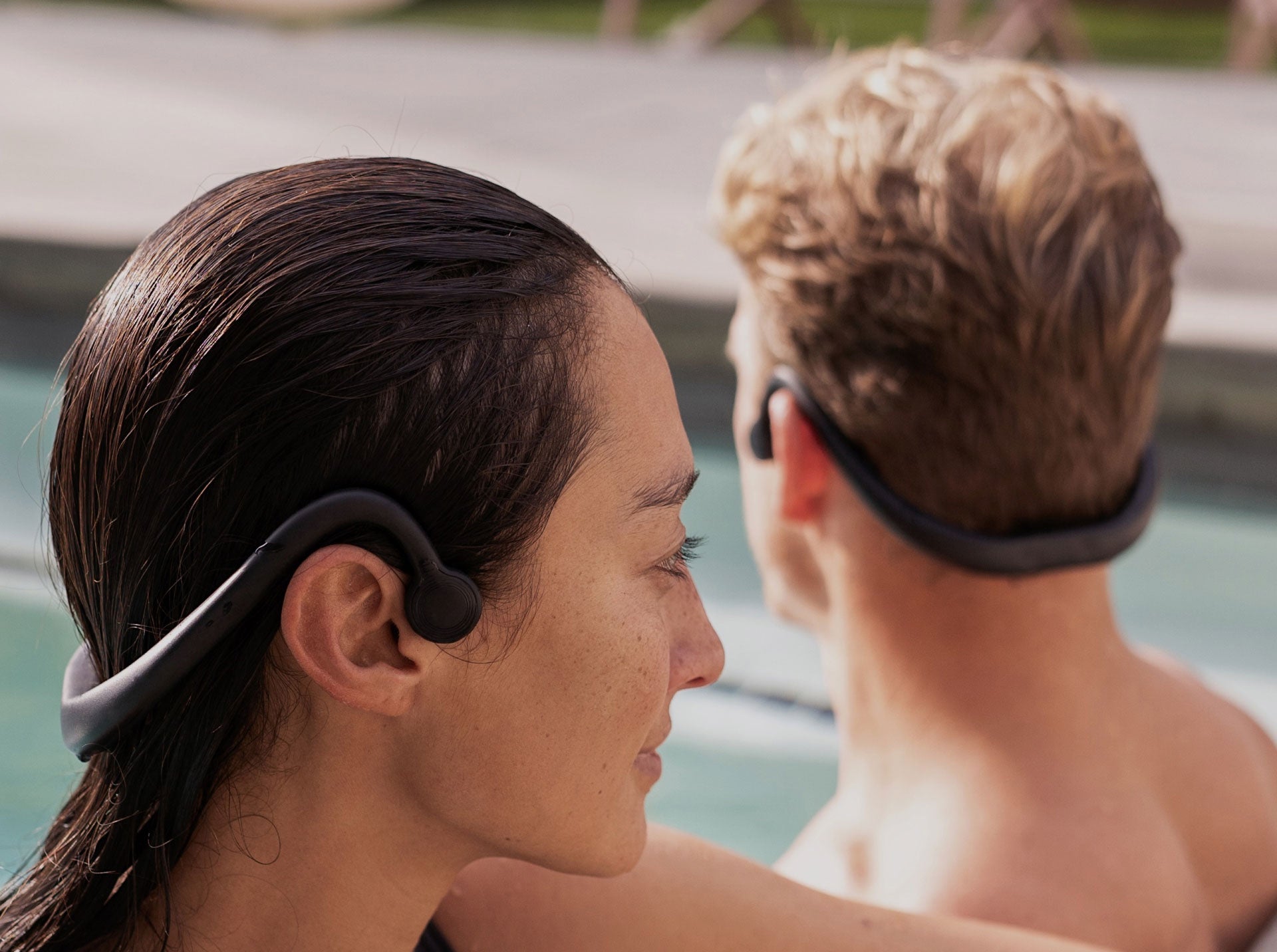
For the first time since his accident, swimming began to feel like the workouts he had loved before—especially his Peloton rides. With Zygo’s headset and guided workouts, he no longer had to spend excessive time planning sessions or staring at data mid-swim. Coaches provided structure and encouragement, and the audio experience allowed him to fully immerse himself in the water instead of constantly managing logistics.
Zygo didn’t just simplify swimming—it transformed it.

Finding Joy, Structure, and Consistency Again
As Justin grew more confident, he began expanding on Zygo’s workouts, creating custom sessions using the Seconds Pro app.
By pairing timed pace instructions with playlists and streaming them through his Zygo headset, he built a system that kept swims engaging, challenging, and mentally freeing.
Some days he follows Zygo’s endless-pool workouts; other days he swims to music, letting the headset run quietly in the background.
Most importantly, swimming stopped feeling like a compromise.
“I’ve come to love swimming—it took a minute,” Justin reflects. “And Zygo has been a big part of that.”
A New Relationship With the Water
Today, Justin swims four to six days a week, and nearly every session includes his Zygo headset. What started as a reluctant necessity has become a passion—one that continues to support his recovery, fitness, and mental focus.
Justin’s story is a powerful reminder that the right tools don’t just improve workouts—they can redefine what’s possible. For him, Zygo wasn’t just about sound in the water. It was about rediscovering joy, motivation, and momentum in a sport he never expected to love.
Redefining What’s Possible in the Pool with Zygo's Swimming Headset
Justin’s story shows that the right audio, coaching, and structure can change how swimming feels—physically and mentally. Whether you’re training, recovering, or simply trying to stay consistent, Zygo helps make every swim count.