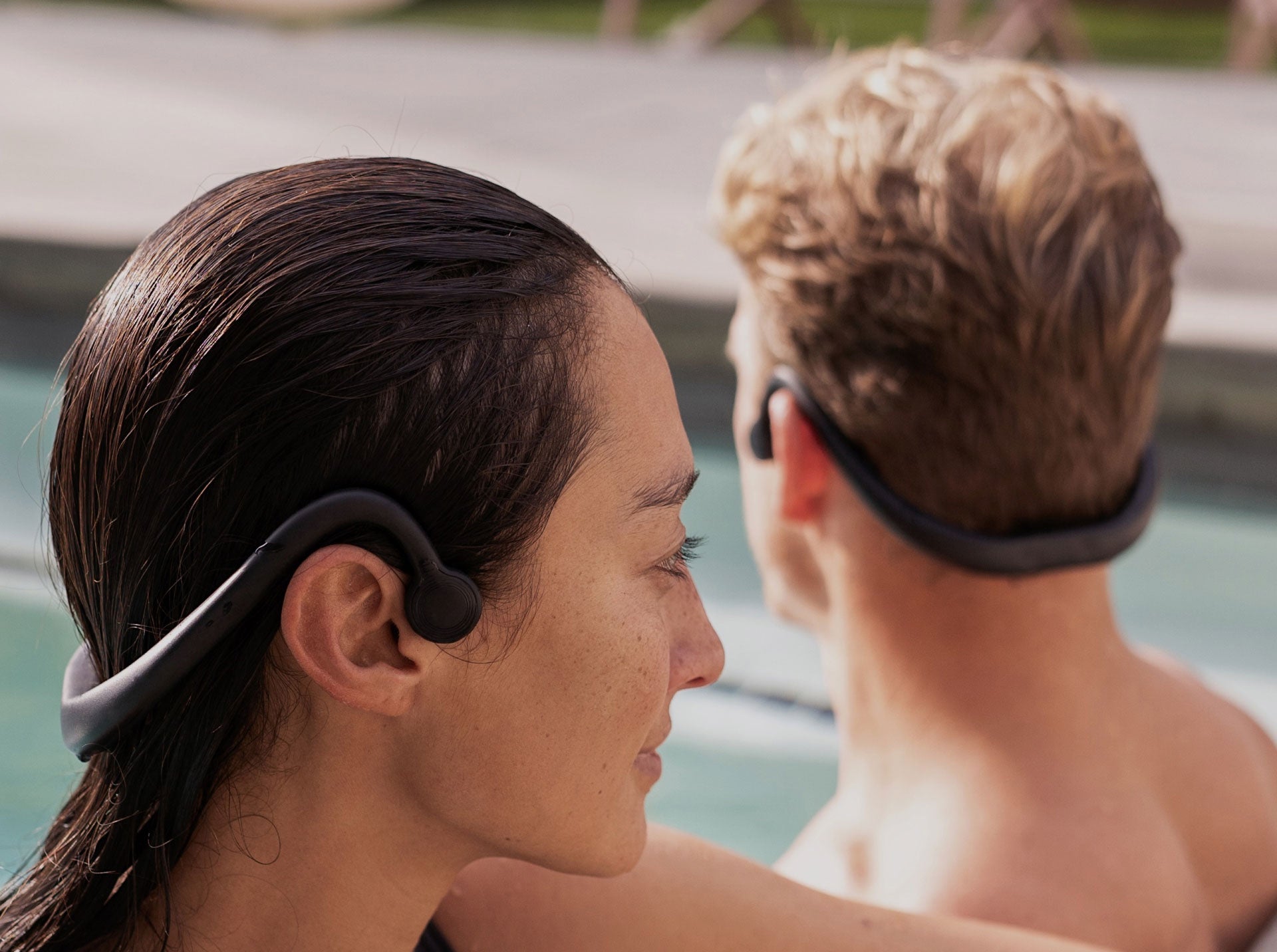

Bone conduction headphones are well-loved by swimmers for their open design, quality sound, and comfort during swim sessions. In the water, swimmers often have limited visibility and awareness of what’s happening around them. Because bone conduction headphones leave the ear canal open, they allow swimmers to stay more aware of their surroundings while still enjoying music or coaching during their workout.
Swimming with your favorite tunes or guided audio can completely change the feel of a workout—and even improve motivation and performance. Before making the investment, it’s natural to have questions about safety and how bone conduction technology works.
At Zygo, we believe informed athletes train better. This guide will help you understand how bone conduction headphones work, whether they’re safe for long swim sessions, and what swimmers should know before bringing audio into the pool.
How Do Bone Conduction Headphones Work?
Bone conduction headphones send vibrations through the cheekbones directly to the inner ear. With bone construction headphones, swimmers can stay alert to their environment while hearing audio clearly.
What Is Bone Conduction Technology?
Bone construction technology sends gentle vibrations through the cheekbones, directly to the inner ear. Compared to traditional headphones that send sound waves through the ear canal, bone construction technology leaves the ear canal open with an open ear design as a form of protection. When situational awareness and comfort are a priority – bone construction technology is the preferred choice.
How This Differs From Traditional Earbuds
Traditional earbuds and headphones deliver sound through small speakers placed directly inside the ear canal. While effective for everyday listening, this approach can present challenges such as trapped moisture and increased pressure during swimming sessions.
Are Bone Conduction Headphones Safe for Your Ears?
In short, yes bone construction headphones are safer for your ears. Keep reading as we dive deeper.
Do They Damage Hearing?
Listening volume and duration are the primary concerns related to hearing damage and headphones for bone construction and traditional headphones. To prioritize hearing protection, follow listening guidelines such as moderate volume levels and occasional breaks during extended wear. Because bone conduction headphones often operate at lower perceived volumes than in-ear headphones, many users naturally listen at safer levels.
Are They Safer Than In-Ear Headphones for Swimming?
For swimmers specifically, bone conduction headphones can offer several safety advantages compared with in-ear headphones. Bone construction headphones sit outside the ear keeping the ear canal open and allowing natural water flow in and out of the ear to avoid irritation. This design promotes safety and comfort especially during long workouts.
Are Bone Conduction Headphones Safe for Long Swim Sessions?
Yes, bone conduction headphones are generally considered safe for long swim sessions when used correctly.
Their external placement and open-ear design help minimize many of the common issues associated with long-term headphone use, such as pressure in the ear canal or trapped moisture. For endurance swimmers, triathletes, and recreational swimmers training for extended periods, this can make a significant difference in comfort.
However, long listening sessions still benefit from smart habits. Keeping audio levels moderate and allowing occasional breaks between workouts helps maintain long-term ear health.

What Makes Waterproof Bone Conduction Headphones Safe for Swimming?
Not all bone conduction headphones are designed for swimming. When choosing a model for the pool, waterproof construction plays a critical role in both safety and durability.
IP Ratings Explained
Waterproof electronics are typically rated using an IP (Ingress Protection) rating, which indicates how well a device resists water and dust. For swimmers, a rating such as IP68 generally means the device can withstand continuous water submersion. This level of protection is important for swim workouts where the headset will be fully underwater for extended periods. Before taking the plunge, verify the IP rating.
Saltwater vs Pool Water Considerations
While there are no direct correlations between bone construction technology and saltwater, saltwater can be more corrosive than chlorinated water. Salt can gradually affect seals, connectors, and external materials if not rinsed after use. Swimmers who train in saltwater pools or open water should rinse their headphones with fresh water after each session and allow them to dry fully before storing them to extend the lifespan.
Who Should Avoid Bone Conduction Headphones?
Bone conduction headphones are safe for most swimmers, but they may not be ideal for everyone. Individuals may want to consult a healthcare professional if experiencing hearing problems, inner ear concerns, recovering from ear surgery, or anyone advised to limit headphone use. If you have a medical concern related to hearing or ear health, it is always best to seek guidance before introducing new audio devices into your training routine.
Tips for Safe Listening During Long Swim Sessions
Whether you swim for fitness or competitive training, a few simple habits can help keep audio listening safe and comfortable.
Helpful listening tips include:
-
Keep audio volume at moderate levels
-
Give your ears occasional breaks between long workouts
-
Choose waterproof headphones specifically designed for swimming
-
Rinse headphones after swimming in saltwater pools or the ocean
-
Store devices in a dry place after workouts
These simple practices help swimmers enjoy the benefits of audio while protecting both their equipment and their hearing.

Frequently Asked Questions About Bone Conduction Safety for Long Swim Sessions
Are bone conduction headphones safe for swimming every day?
Yes. Waterproof bone conduction headphones can be used daily. Prioritize volume and duration to protect your ears.
Can bone conduction headphones damage your hearing?
Like any audio device, hearing damage is typically related to volume levels and listening duration, not the technology itself. Keeping audio at moderate levels helps protect hearing.
Are bone conduction headphones better than earbuds for swimmers?
Many swimmers prefer bone conduction headphones because they do not sit inside the ear canal, which can improve comfort especially during long swim sessions.
Do bone conduction headphones work underwater?
Yes. Waterproof bone conduction headphones designed for swimming can transmit sound effectively underwater because vibrations travel through bone rather than relying on air in the ear canal.
Ready to take the plunge? Experience the difference with Zygo bone construction headphones for swimming.