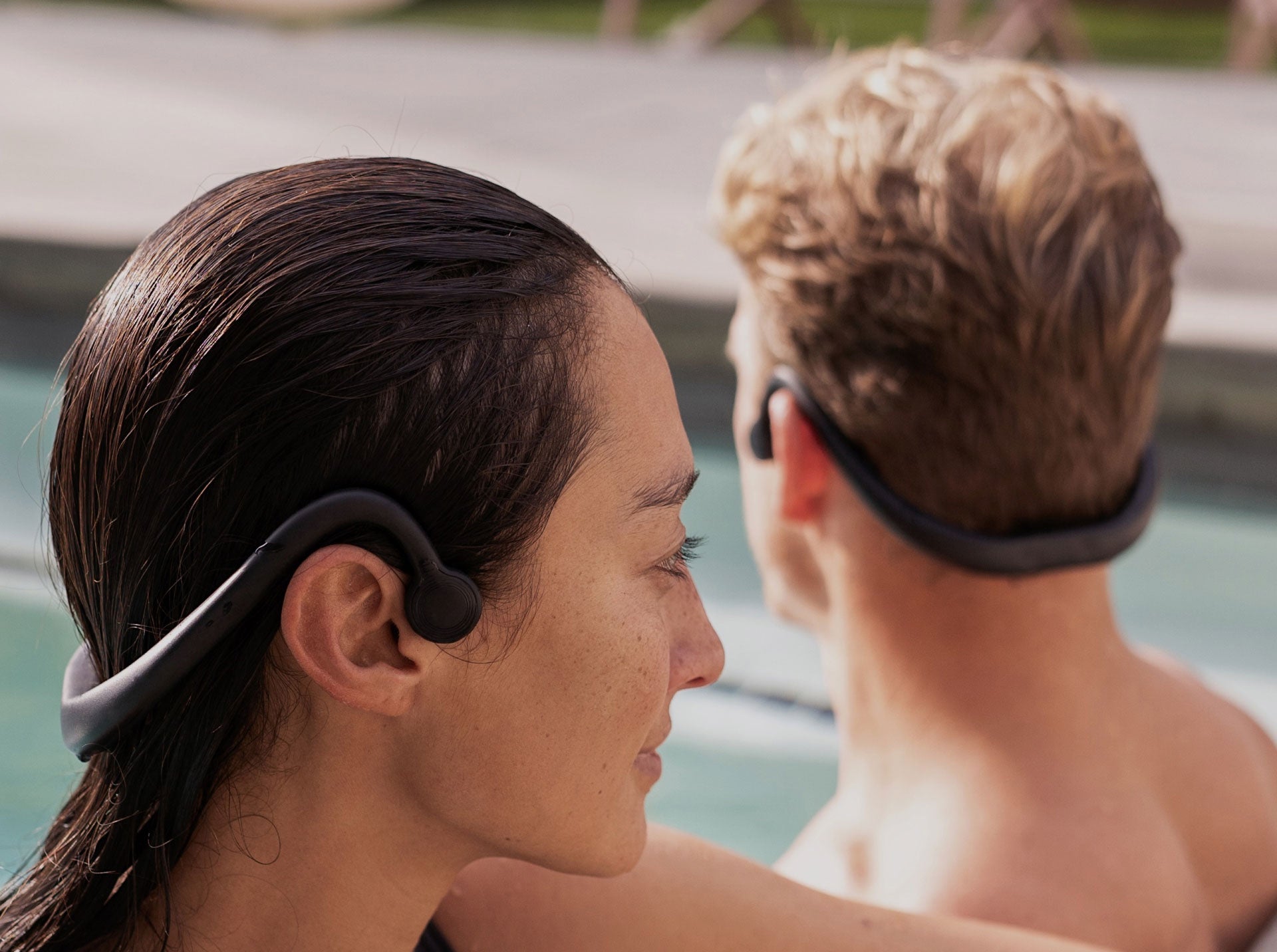

Swimming is one of the most effective full-body workouts, but like any workout, it can start to feel repetitive. That’s why more swimmers are turning to headphones for swimming to stay motivated, improve pacing, and make time in the pool more enjoyable.
If you’ve ever wondered how underwater headphones actually work or which ones are worth it—you’re not alone. In this guide, we’ll break down everything you need to know about the best headphones for swimming, including how they work, what features to look for, and the top option for swimmers today.
Can You Use Headphones While Swimming?
Yes, but not traditional headphones. Standard Bluetooth earbuds don’t work underwater because water blocks Bluetooth signals.
That’s why swimming headphones use bone conduction technology combined with specialized transmitters or onboard storage to deliver audio while submerged.
This allows swimmers to:
-
Listen to music while swimming laps
-
Follow guided workouts
-
Stay motivated during long sessions
Why Should You Wear Headphones While Swimming?
You might absolutely love every moment in the pool, but just like any other workout, it can get a bit repetitive. Giving yourself a little background music or your favorite podcast is the perfect way to break up the monotony of steady-state cardio exercise.
There are some science-backed reasons why listening to music during exercise is a great idea:
1. Set Your Pacing
In a sport like swimming, music can help you keep pace without feeling like you are working extra hard. For most exercise, the magic beat seems to be between 120 and 140 bpm (beats per minute). Just keep swimming to the beat, and you’ll meet your goals!
2. Work Out Harder
In some cases, music can actually make you work out harder. Studies have shown that when fatigued, people can be influenced by their music to push themselves through a tough workout, when without music, they may not have.
3. Music Distracts You
In the best possible way, music can distract you from your workout, which is a blessing in moments of struggle. If you’re grooving to your favorite tunes, you just might be focused on the chorus and not on the muscle fatigue you’re feeling. Use that energy to help distract you from your workout, and keep going!
4. Music Can Boost Your Mood
Want to elevate your mood and improve your outlook on life? Music is the answer! Music has been proven to improve mood and create a positive atmosphere. The pool is no exception. Swimming alone has mood-boosting powers, so adding music to the mix creates the perfect combination.
How Do Underwater Headphones Work?
You may be wondering how it’s possible to listen to music underwater. Traditional earbuds are not an option in the swimming pool, but there is a different form of technology that makes underwater tunes possible. Most swimming headphones use bone conduction technology, which allows sound to travel through vibrations instead of the ear canal.
Bone conduction is a fascinating innovation that’s been making waves (or, more appropriately, vibrations!) in the audio industry. It has really blown up in the past few years. Bone conduction differs from traditional headphones in that it uses the sound vibrations of the skull and/or jawbone to transmit sound rather than the ear canal.
Here’s how it works: Bone conduction headphones sit on your cheekbones, just in front of your ears. When you play audio, these devices vibrate, sending sound waves through your facial bones straight to your cochlea.
This part of your inner ear translates vibrations into the sounds you hear. It’s kind of like a mini massage for your skull — with a soundtrack!
How to Choose the Best Headphones for Swimming
Choosing the best swimming headphones depends on your goals, training style, and the type of audio experience you want in the water.
Consider Your Personal Needs
If you are considering a pair of bone conduction headphones, it’s important to think about what you will be using them for. Are you a competitive swimmer? An on-and-off swim athlete? A weekend warrior?
Maybe you also want to use your headphones when you are going for a jog so that you can hear ambient sounds while out for your run. One of the most important things you can do when making any purchase is to think about how you will be using them.
Water Resistance
Look for headphones that can be submerged in water for extended periods of time. Most headphones that are marketed for underwater use do have a waterproof rating, so that’s definitely something you want to look for.
Most Up-to-date Technology
Not all bone-conduction headphones are created equal. Some have more updated technology than others.
Zygo, for example, has a special transmitter that not only boosts Bluetooth signals but also allows for communication between a swim coach on the pool deck and a swimmer in the water. This type of technology is unmatched in the industry and can make or break training for a more serious swimmer.
Comfort and Stability
Definitely opt for a design that stays securely in place during swimming strokes and turns. A wrap-around design with a band provides a good level of stability for almost all athletic activities. Wearing bone-conduction headphones can take a little getting used to, so give it a chance for a few swims before you decide for sure whether or not it works for you.
Battery Life
You’ll want to look for a model with sufficient battery life. Nothing is worse than starting your workout only to realize that your headphones don’t have enough juice to get you through your workout.
Price Point
If you’re like most people, price is always a consideration when it comes to a purchase like headphones. While it can be tempting to opt for a cheaper model, when it comes to bone-conduction headphones, you want to make sure you’re purchasing a product that will stand the test of time.
While quality bone-conduction headphones can be an investment, it’s one worth making. As the old saying goes, you get what you pay for.
Connectivity: Streaming vs MP3
Not all swimming headphones are created equal. Many require you to download MP3 files before swimming because Bluetooth does not work underwater.
Some advanced systems, like Zygo, use a transmitter to stream audio in real time, allowing you to listen to music, podcasts, and coaching without preloading files.
Bone Conduction vs Traditional Swimming Headphones
Bone conduction headphones are the preferred option for swimmers because they:
-
Leave your ears open
-
Stay secure during movement
-
Work comfortably with swim caps and goggles
Traditional in-ear waterproof headphones often:
-
Trap water in the ear canal
-
Become uncomfortable during long swims
-
Fall out more easily

Our Pick: Best Headphones for Swimming
After comparing features, performance, and usability, the Zygo Z2 stands out as the best headphones for swimming, especially for swimmers who want real-time audio and coaching. Let us put you on to all of the features that make the Z2 a standout in the underwater headphone world.
Streaming Capabilities
One of the most significant advantages of the Zygo Z2 is its ability to stream audio content wirelessly underwater. Unlike traditional Bluetooth headphones that struggle to maintain a connection in water, the Z2 uses its own unique wireless system to deliver clear, crisp audio, even when the user is fully submerged. No need to pre-download playlists or podcasts like some other devices on the market.
Impressive Range and Battery Life
The Z2’s operating range is an impressive 300 feet in the pool, and an unbelievable half a mile above the water! With this type of range, users have flexibility in placing their phone and transmitter. The battery life has also been improved from older models, making the Z2 one of the best of its kind.
Walkie-Talkie Communication Capability
Swim coaching is difficult to do in the moment. It’s a little difficult to communicate with a swimmer while they are underwater or splashing around as their strokes hit the water’s surface.
With the Z2, swim coaches can use the transmitter to access one-way communication with the swimmer in the water. This can be key to making form corrections on the spot rather than after a swim is completed.
Integrated Lap Counter
Another notable feature is the Z2’s fully integrated lap counter, which eliminates the need for a separate tracking device. This function, among others, is available through the Zygo app subscription.
Zygo App Features
Speaking of the app, it’s worth talking about on its own. If you’re interested in taking your swim training to the next level, this app is the answer. You’ll find guided workouts, a tempo trainer, live classes, metric tracking, a leaderboard to help you stay competitive, and, of course, the lap counter.
The best part? It’s compatible with iOS and Android devices, so no one is left out!
Sound Quality
The sound quality you will get with the Zygo Z2 is surprisingly good. Consumers agree that no other bone-conduction headphone on the market offers sound quality like the Z2.
Ear Plugs and Storage
While it may seem like a small feature, the Z2 comes with its own ear plugs in the storage case. This is an advantage because there is a spot in that case where your ear plugs can always live, whether or not you lose the individual ones that come with the device (Though you’re much more likely to be able to keep track of them with the built-in storage!).
Choosing the Best Headphones for Swimming
Choosing the best headphones for swimming can completely transform your time in the water. Whether you're training, relaxing, or just looking to stay motivated, the right headphones make every swim more enjoyable.
With advanced features like real-time audio streaming, coaching communication, and lap tracking, the Zygo Z2 is built specifically for swimmers who want more from their workouts.
If you're ready to upgrade your swim experience, it might be time to take the plunge.

Frequently Asked Questions About Swimming Headphones
What are the best headphones for swimming?
The best headphones for swimming use bone conduction technology and are fully waterproof. Devices like Zygo allow swimmers to listen to audio underwater without blocking the ear canal.
Do Bluetooth headphones work underwater?
No. Bluetooth signals do not travel well through water. That’s why most swimming headphones use MP3 storage or a transmitter system to deliver audio.
Are bone conduction headphones good for swimming?
Yes. Bone conduction headphones are ideal for swimming because they stay in place, leave your ears open, and work effectively underwater.
Can you listen to music while swimming laps?
Yes. With waterproof swimming headphones, you can listen to music, podcasts, or guided workouts while swimming laps.
Sources:
How Do Bone Conduction Headphones Work? | Salus University Health
Bone Conduction Headsets ("Bonephones") Research | Georgia Institute of Technology
Bone Conduction Headsets: Bad to the Bone | Hearing Health and Technology Matters
The World's Only Streaming Headset for Swimming Just Got Better | News Atlas
Can Listening to Music Improve Your Workout? | National Center for Health Research