
How Audio Coaching Helps Swimmers Maintain Pace and Form
Swimming looks simple from the outside: push off the wall, move through the water, breathe, turn, and repeat. But anyone who has spent time swimming laps knows how much is happening beneath the surface.
Your breathing rhythm, stroke timing, body position, kick, head movement, and pace all need to work together. When one piece falls out of sync, the entire swim can start to feel harder. That is where audio coaching can make a major difference.
With the right underwater audio technology, swimmers can receive guidance, cues, music, tempo support, or structured workouts while they are actually in the water. Instead of stopping at the wall to check a workout or waiting for feedback after a set, audio coaching helps swimmers stay focused in real time.
Why Pace Is So Hard to Maintain While Swimming
Pacing is one of the most difficult skills for swimmers to master. It is easy to start too fast, lose control of your breathing, and struggle through the second half of a workout. It is also easy to swim too slowly without realizing it, especially during longer endurance sets.
Unlike running or cycling, swimming does not always give you easy access to visual feedback. You cannot glance at your phone, check a screen, or listen to a coach the same way you might during a land-based workout. Most swimmers are left counting laps, watching the pace clock, or relying on feel.
Audio coaching gives swimmers another tool. A guided voice, tempo cue, or structured workout can help you understand when to push, when to recover, and when to settle into a sustainable pace. This can make swimming workouts feel more organized and easier to follow.

How Audio Cues Support Better Swimming Form
Good swimming form depends on consistency. A strong stroke is not just about power. It is about body position, timing, balance, and efficiency.
The challenge is that form often breaks down when fatigue sets in. Your head may lift too high. Your kick may slow down. Your stroke may shorten. Your breathing may become rushed. These small changes can create drag and make each lap feel harder.
Audio coaching can help swimmers stay aware of technique while they swim. Simple cues like “relax your shoulders,” “lengthen your stroke,” “control your breathing,” or “hold your body line” can bring attention back to form before bad habits take over.
This is especially useful for swimmers working on freestyle drills, breathing technique, interval sets, or endurance training. Instead of waiting until the workout is over to think about form, swimmers can make small corrections during the session.
Guided Swim Workouts Add Structure
One of the biggest reasons swimmers lose focus is that they do not always know what to do next. Without a plan, it is easy to swim a few laps, rest, repeat the same pace, and eventually get bored.
Guided swim workouts help solve that problem by giving each session a purpose. A workout might include a warm-up, technique set, endurance block, interval training, and cooldown. Audio guidance can walk swimmers through each part of the workout without requiring them to stop and check notes.
This structure is helpful for beginners who want to build confidence, fitness swimmers who want more variety, and experienced athletes who want more intentional training. It can also make the pool feel less repetitive because each section of the workout has a clear focus.
Audio Coaching Helps With Breathing Rhythm
Breathing is one of the most common challenges in swimming. Even fit athletes can feel uncomfortable in the water if they have not learned how to control their breathing.
Audio coaching can help swimmers focus on breath timing and rhythm. A calm voice or steady tempo can remind swimmers to exhale underwater, avoid rushing each breath, and stay relaxed during harder efforts.
This can be especially helpful during longer sets, where mental tension often leads to physical tension. When breathing becomes rushed, form usually follows. By helping swimmers stay calm and rhythmic, audio coaching can support better pacing and smoother movement through the water.

Why Underwater Audio Matters
Regular headphones are not built for swimming, and standard Bluetooth does not work well underwater. That is why many older swim headphones rely on MP3 files that need to be downloaded before a workout.
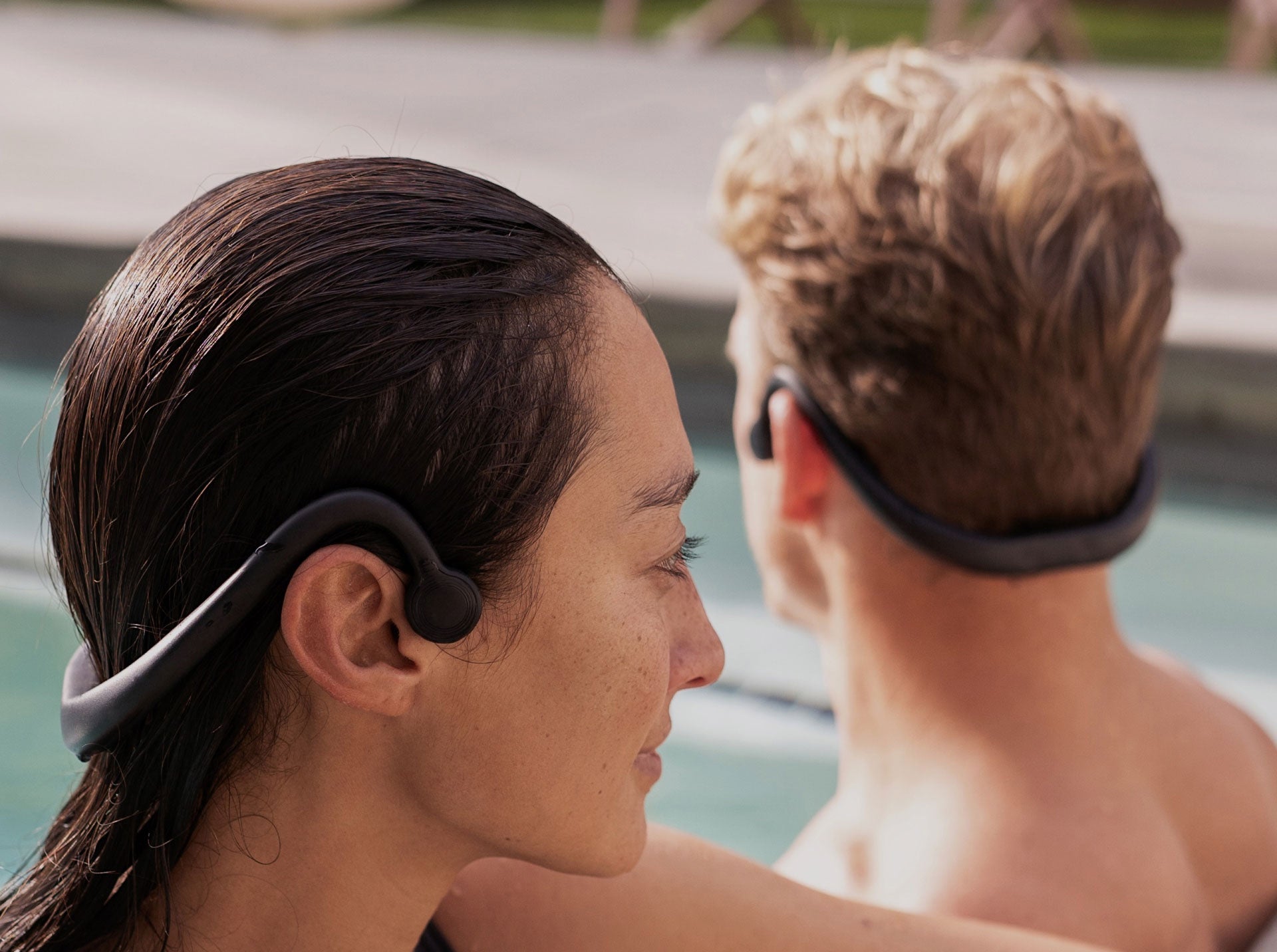
Zygo was designed for a more connected swim experience. With Zygo Z2 Waterproof Headphones, swimmers can stream audio from their phone while swimming, including music, podcasts, audiobooks, guided workouts, and coaching.
This matters because audio coaching is most useful when it fits naturally into your routine. If it is difficult to set up, limited to downloaded files, or unreliable in the water, swimmers are less likely to use it consistently. Zygo makes underwater audio easier to bring into regular pool training.
Better Pace, Better Form, Better Consistency
Audio coaching does not replace practice, technique work, or a good swim coach. But it can help swimmers stay more focused during the moments when form and pacing matter most.
For beginners, audio coaching can make swim workouts feel less intimidating. For fitness swimmers, it can add motivation and structure. For competitive swimmers, it can support rhythm, pacing, and technique awareness during harder sets.
Swimming will always require patience and repetition. But the right audio can make that repetition more purposeful. With cues, guidance, rhythm, and structure in the water, swimmers can maintain better pace, protect their form, and make every lap feel more intentional.