
Swim training has always required focus. Once you push off the wall, there are no treadmills, mirrors, phone screens, or easy glances at a dashboard. There is only the water, your breath, your stroke, and the rhythm of the lane.
That simplicity is part of what makes swimming so powerful. But it also creates a challenge: swimmers often train with less real-time feedback than athletes in almost any other sport. Runners can check pace from a watch. Cyclists can follow power zones on a screen. Gym athletes can use apps, timers, and mirrors to guide every rep.
Swimmers usually have to wait until the wall.
The future of swim training is changing that. Instead of asking swimmers to stop, look down, tap a device, or break their flow, new swim training technology is moving toward real-time feedback without screens. With underwater audio technology, swimmers can receive cues, lap updates, guided workouts, and coaching while they are still moving through the water.
Why Screens Do Not Fit Naturally Into Swimming
Screens work well on land because athletes can see and interact with them easily. A runner can glance at a smartwatch. A cyclist can check a bike computer. A weightlifter can review a workout app between sets.
Swimming is different.
Looking at a screen in the water interrupts body position, stroke rhythm, and breathing. Touch controls are awkward with wet hands. Stopping to check data breaks momentum. Even waterproof watches often become more useful after the workout than during it.
The result is that many swimmers collect data but do not receive guidance when they need it most. They may see their pace, splits, or distance later, but that does not always help them adjust during the set itself.
That gap is where screen-free feedback becomes so valuable.
Real-Time Feedback Helps Swimmers Stay in Motion
Real-time swim feedback gives swimmers information while they are still training. Instead of waiting until the interval is over, swimmers can receive cues about distance, effort, timing, or what comes next.
This matters because small adjustments during a swim can change the quality of the entire workout. A pacing reminder can help prevent a swimmer from starting too fast. A technique cue can bring attention back to body position before fatigue takes over. A lap update can remove the mental burden of counting and help the swimmer stay focused.
For athletes working on swim pacing, feedback is especially important. Swimming too hard too early can make the second half of a workout feel much harder than planned. Swimming too casually can limit progress. Real-time audio cues help swimmers stay closer to the intended effort.
Audio Is the Natural Interface for the Pool
The future of swim training is not about putting more screens in front of swimmers. It is about finding technology that fits the water.
Audio is the natural interface for pool training because it does not require swimmers to stop, look, or touch anything mid-stroke. It can deliver instructions, reminders, lap updates, and motivation while preserving the flow of the swim.
That is why audio coaching is becoming such an important part of modern swimming technology. A swimmer can hear when to push, when to recover, when to focus on breathing, or when to move into the next part of a workout. The guidance happens in the moment, not after the fact.
For swim coaches, audio also opens up a more direct way to support athletes in the water. Instead of relying only on deck instructions or feedback between sets, coaching can become more immediate and easier for swimmers to act on.
Guided Workouts Without Stopping at the Wall
One of the most common problems swimmers face is not knowing what to do next. Without a plan, it is easy to swim a few laps, rest, repeat, and eventually lose focus.
Guided swim workouts solve that by giving each session structure. A workout can include a warm-up, technique work, endurance sets, interval training, and cooldowns. Audio guidance helps swimmers follow the plan without memorizing it beforehand or stopping to check notes.
This makes swimming workouts feel more intentional. Beginners get direction. Fitness swimmers get variety. Competitive swimmers get more structure. And every swimmer gets a clearer sense of what they are doing and why it matters.
Lap Counting Becomes More Useful with Audio
Lap counting has been a major step forward in swim technology, but it becomes even more powerful when paired with audio. A watch can track distance, but an audio cue can tell swimmers where they are in real time.
With lap counting and audio training, swimmers no longer have to spend mental energy wondering whether they are on lap 12 or lap 14. They can stay focused on stroke rhythm, breathing, and effort while still knowing their progress.
That shift reduces mental fatigue. It also makes workouts feel more rewarding because progress is clear while the swim is happening.
Why Underwater Audio Requires Different Technology
Of course, bringing audio into the pool is not simple. Standard wireless headphones were not built for underwater performance, and Bluetooth does not work well underwater. Water weakens the signal, which can cause dropouts or disconnection once a swimmer submerges.
That is why swim-specific audio systems matter. Swimmers need technology designed for water, not land-based earbuds trying to survive a pool environment.
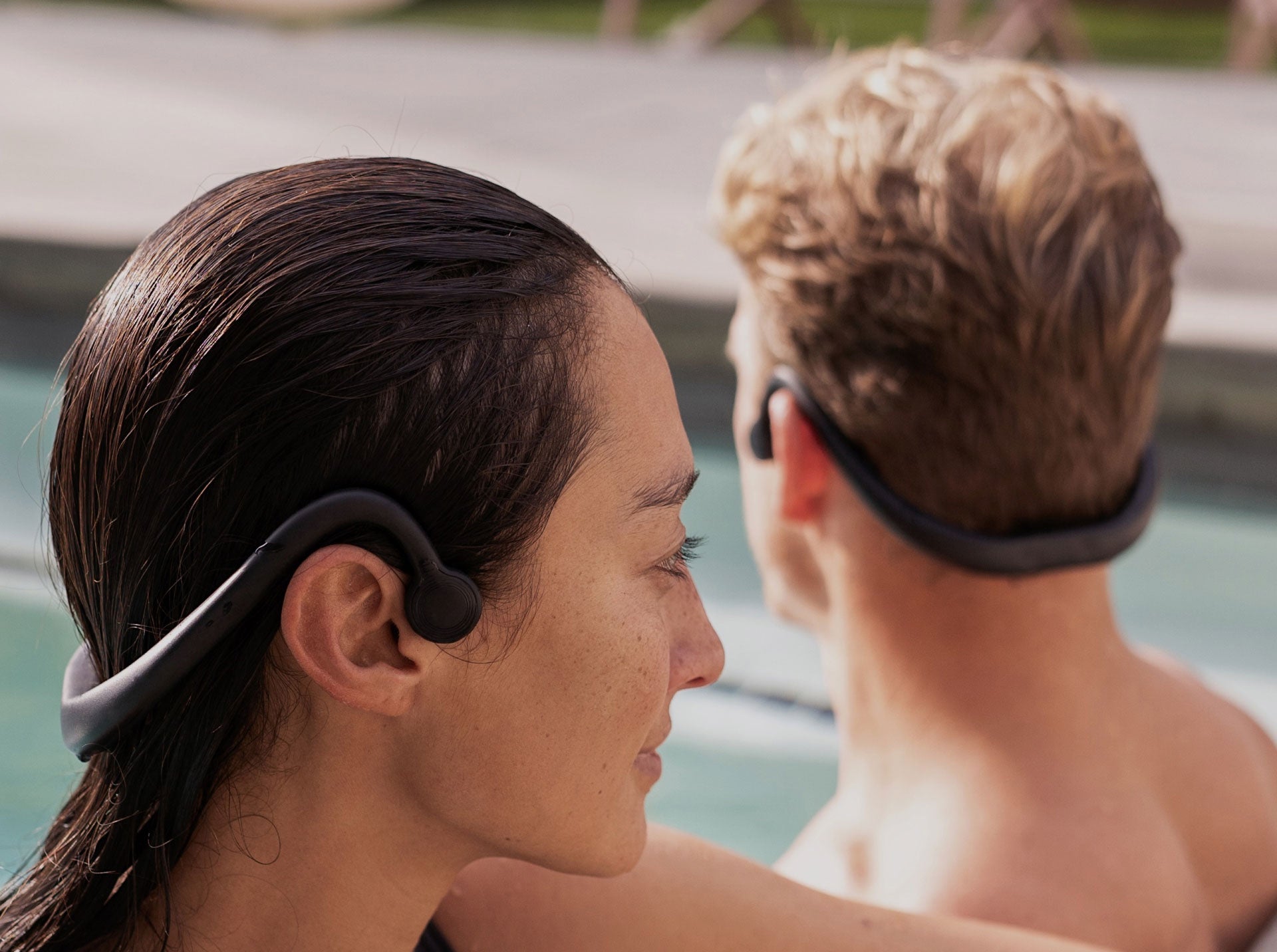
With Zygo Z2 Waterproof Headphones, swimmers can stream audio from their phone while swimming, including music, podcasts, audiobooks, coaching, and guided workouts. Instead of relying on screens or traditional Bluetooth underwater, Zygo helps bring real-time audio into the swim experience.
The Future Is Feedback That Does Not Break Flow
The best swim technology should not make swimming feel more complicated. It should make training clearer, more motivating, and easier to sustain.
The future of swim training is screen-free, audio-driven, and built around the rhythm of the water. Swimmers do not need more interruptions. They need feedback that arrives at the right moment, in a way that keeps them moving.
Real-time feedback without screens gives swimmers something they have long been missing: guidance during the swim itself. And as underwater audio continues to improve, the pool is becoming a more connected training environment without losing what makes swimming feel so focused in the first place.
For swimmers chasing better pacing, more consistent workouts, and a stronger sense of purpose in the water, that future is already here.