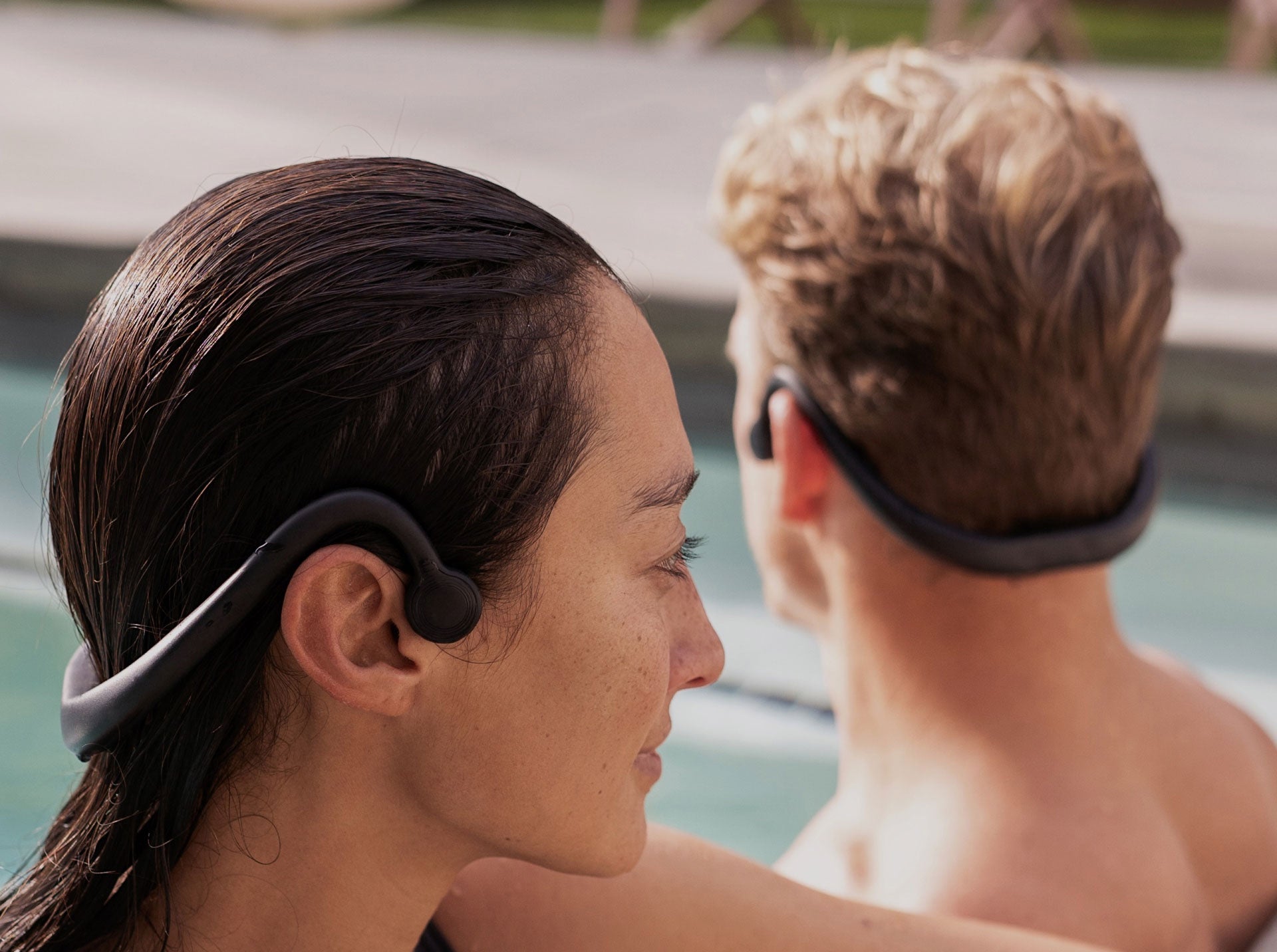

Swimming has always been one of the most effective workouts, but for years, swim technology focused on everything except sound. Swimmers got pace clocks, lap counters, waterproof watches, stroke tracking, and post-workout data. What they rarely got was real-time audio in the water.
That gap was not an accident. It was a technology problem.
On land, audio is simple. Runners can stream music from a phone. Cyclists can follow coaching cues through earbuds. Gym athletes can listen to playlists, podcasts, or training apps without thinking much about the device. In the pool, everything changes. Water blocks signals, muffles sound, interrupts screens, and makes normal headphones unreliable.
For decades, that meant traditional swim tech left audio behind. But with new underwater audio technology, swimmers are finally gaining access to the same kind of motivation, coaching, and real-time guidance that other athletes have had for years.
Why Traditional Swim Tech Focused on Data First
Early swim technology solved the easiest problem first: measurement. Pace clocks helped swimmers track intervals. Watches helped count laps. Apps stored workout history. These tools made swimming more measurable, especially for athletes who wanted to track distance, pace, stroke rate, and calories.
That was useful, but it was also limited. Much of the information arrived after the workout or during breaks at the wall. Swimmers could review what happened, but they still had to train largely on feel while they were moving.
This created a very different experience from running or cycling, where athletes can receive real-time audio cues, music, pace alerts, and app-based coaching during the workout itself. Traditional swim technology gave swimmers numbers, but it did not always give them in-the-moment guidance.
The Water Problem: Why Audio Was Left Behind
The biggest reason swim tech left out audio is simple: water makes wireless audio difficult. Standard Bluetooth was not designed for underwater performance, which is why Bluetooth does not work well underwater. Signals weaken quickly once submerged, causing dropouts, disconnection, or unreliable playback.
This is why many older swim headphones relied on built-in MP3 storage. MP3-based swim headphones allowed swimmers to listen underwater, but they came with tradeoffs. Swimmers had to download files in advance, manage playlists manually, and give up live streaming from their favorite apps.
For people used to streaming music, podcasts, audiobooks, and workout guidance on land, that felt outdated. Swimming needed a better solution.
Why Audio Matters for Swim Training
Audio is not just entertainment. For swimmers, it can help solve some of the biggest challenges in the pool: boredom, pacing, consistency, and structure.
Swimming can be peaceful, but it can also feel repetitive. Long sets often mean staring at the black line, counting laps, and trying to stay focused without much external feedback. This mental load can make it harder to stay consistent, especially for recreational swimmers or people training on their own.
That is where music for swimming, podcasts, guided workouts, and coaching cues can make a difference. Audio gives swimmers something to follow. It can support rhythm, improve motivation, and make time in the water feel more engaging.
When swimmers enjoy the experience, they are more likely to return to the pool. And in swimming, consistency is often what drives progress.
How Audio Coaching Changes the Experience
Traditional swim coaching usually happens from the pool deck. A coach watches, gives feedback between sets, and calls out instructions when the swimmer is above water or resting. That system works, but it has limits. Once the swimmer pushes off, feedback becomes delayed.
Audio coaching changes that by bringing guidance into the swim itself. Instead of waiting until the wall, swimmers can hear cues related to pacing, breathing, effort, or technique while they are still moving.
This matters because form often breaks down during the workout, not after it. A swimmer may start lifting their head, shortening their stroke, or rushing their breathing as fatigue sets in. Audio cues can help bring attention back to form in the moment, making the session more focused and productive.
For swim coaches, audio also opens up new possibilities for communication. Instead of relying only on shouted instructions from the deck, coaches can support swimmers with clearer, more immediate feedback.
Guided Workouts Fill the Structure Gap
Another reason traditional swim tech felt incomplete is that swimmers often had to create their own plan. Without a coach, many people fall into the same routine: swim a few laps, rest, repeat, and stop when they feel tired.
Guided swim workouts help turn pool time into a structured training session. A swimmer can follow a warm-up, main set, interval block, technique drill, and cooldown without memorizing the workout beforehand. Audio guidance keeps the session moving and reduces the need to stop and check notes.
This makes swimming workouts feel more purposeful. Beginners get direction. Fitness swimmers get variety. Competitive swimmers get more intentional training. And everyone gets a clearer sense of what they are supposed to do next.
Where Lap Counting and Audio Work Together
Lap counting is one of the most common swim tech features, but it becomes more useful when paired with audio. A number on a watch is helpful after the fact, but a real-time audio cue can help swimmers know where they are during the workout.
With lap counting and audio training, swimmers can reduce the mental burden of tracking distance manually. Instead of wondering whether they are on lap 12 or 14, they can stay focused on breathing, stroke rhythm, and effort.
This is the direction swim technology is moving: less interruption, more guidance, and better feedback while the swimmer is still in motion.
Why Zygo Represents the Shift Toward Audio-First Swim Tech
Zygo was built around the idea that swimmers should not have to choose between the benefits of swimming and the audio experience they already use in every other workout. With waterproof swimming headphones, swimmers can stream music, podcasts, audiobooks, coaching, and guided workouts while they swim.
Instead of relying on standard Bluetooth underwater, Zygo uses a system designed specifically for the pool. That allows swimmers to bring real-time audio into an environment where traditional wireless headphones fall short.
This is why audio is becoming one of the most important parts of modern swim technology. It does not replace the water, the rhythm, or the quiet focus that makes swimming unique. It supports those things by adding motivation, structure, and guidance when swimmers need it most.
The Future of Swim Technology Includes Audio
Traditional swim tech left out audio because the pool made it difficult. The technology focused on what could be measured, stored, and reviewed later. But swimmers need more than post-workout data. They need feedback, motivation, and structure during the swim itself.
That future is already here.
As underwater audio improves, swim technology is becoming less about checking screens and more about staying connected in motion. Swimmers can train with better pacing, clearer guidance, and more enjoyment without breaking the flow of the workout.
For years, swimming was the quiet sport. Now, audio is helping make it more connected, more motivating, and easier to stick with — one lap at a time.