
How Each Technology Works
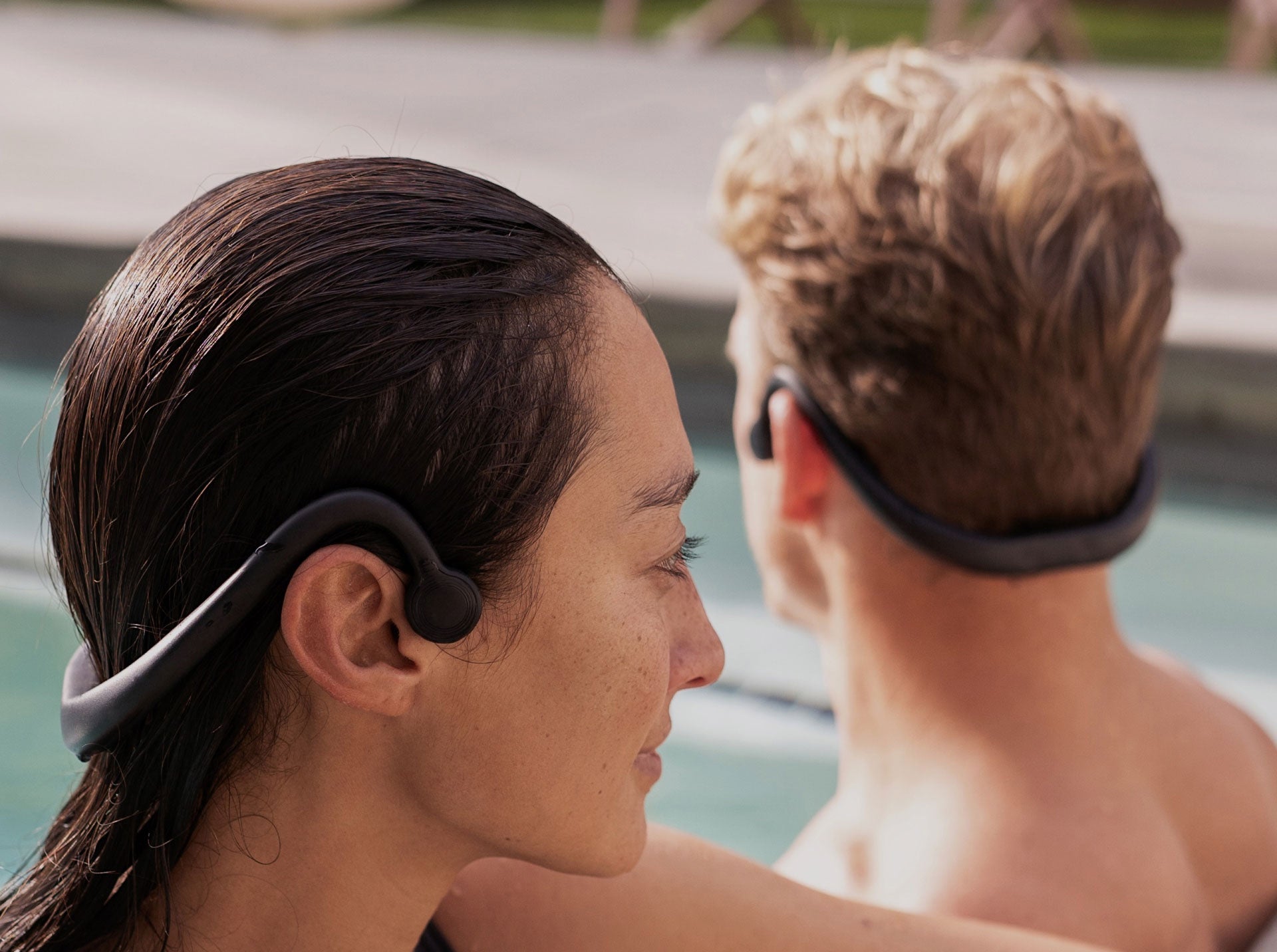
Bone conduction headphones sit outside your ears and send sound vibrations through the bones of your skull, directly to your inner ear. They completely bypass your eardrum entirely. These waterproof headphones are perfect for people who run, bike, or swim, where hearing traffic or voices in their surroundings is important. They can stream music or audiobooks while you’re swimming underwater. Their dedicated transmitter, which can be placed outside the pool, sends a signal to your headset, which allows live streaming from your phone.
Waterproof earbuds use sealed acoustic drivers to push sound through the air into your ear canal, and their water-resistant design keeps moisture out while maintaining audio from an MP3 during swimming. Waterproof earbuds can’t livestream music underwater, so instead you’ll have to download MP3s ahead of time onto your device to listen to stored music or audio. You can’t integrate with apps or listen to live music while you’re swimming if you’re wearing waterproof earbuds because they’re only for offline use.
What Are Bone Conduction Headphones?
Bone conduction headphones don’t sit inside your ears like regular earbuds. Instead, sound is sent through your cheekbones, which is a comfortable, accessible choice that plays live music while you’re underwater. Their technology is useful for swimmers, runners, cyclists, and people who have certain types of hearing loss.
What Are Waterproof Earbuds?
These earbuds combine water-resistant materials with smart design to send audio through speakers. While livestreaming isn’t possible underwater, many waterproof earbuds come with built-in memory to listen to MP3 music offline.
Headphone Sound Quality and Performance Underwater
Zygo bone conduction headphones perform consistently underwater and are fully functional even when submerged in water. They’re engineered to deliver a superior wireless livestreaming experience underwater. You can enjoy your favorite music or podcast while you swim without being inconvenienced by having to download or sync either. Earbuds can’t livestream because they depend on preloaded, stored MP3 files for playback.

Comfort and Fit for Swimmers: Bone Conduction vs Earbuds
Unrivaled bone conduction headphones have a wraparound, open-ear design that doesn’t go inside the ear canal, making them more comfortable than earbuds for long swim sessions and for people who don’t like feeling pressure caused by traditional earbuds. They gently rest on your cheekbones and don’t feel irritating, the way that earbuds do. Earbuds can allow water to get trapped in the ear canal, causing discomfort or ear infections, and may also shift, sink, or float away during vigorous movement like swimming, especially if they aren’t fitted properly.
Safety and Awareness in the Pool
Because they have an open ear design for situational awareness, bone conduction headphones are safer to wear than earbuds in the pool or in open water. If you’re wearing waterproof earbuds, you can’t hear ambient noise which means If you’re wearing waterproof earbuds, you can’t hear ambient noise which means you probably won't hear boats, coaches, lifeguards, or other swimmers if there is an emergency. When you wear a Zygo bone conduction headset, your swimming coach can communicate with you in real time, giving you a competitive advantage if you're a high-performance athlete.
Is there a Difference in Durability and Maintenance between bone conduction and earbuds?
Low-maintenance bone conduction headphones with an open-ear design are easier to maintain than earbuds because they don’t go inside your ear and aren’t exposed to earwax buildup. They’re also built with sweat-resistant materials that are durable. You can quickly wipe them down after you use them. In contrast, you’ll need to dry your earbuds thoroughly, clean the tips, and check to ensure there is no water intrusion, especially when you swim in saltwater while wearing them. To stay hygienic, earbuds will eventually need replacement tips or deeper cleaning to preserve sound quality.

Best Options for Each Type
If you’re considering bone conduction headphones vs earbuds, here are a few of the best options:
Best Bone Conduction Headphones – Zygo
Zygo is the best bone conduction headphone because it surpasses the competition when it comes to underwater performance, audio clarity, and real-time streaming. Unlike other waterproof options that rely solely on MP3 playback, Zygo uses a poolside transmitter to beam live audio directly to the headset, even when they’re submerged.
For swimmers who want to follow guided workouts, listen to coaching cues, or enjoy music without preloading files, they’re the perfect solution. The open-ear design ensures situational awareness, allowing you to hear ambient sounds while maintaining comfort and safety in the water. With a secure fit and IP68 waterproof rating, Zygo is built for endurance and reliability. Whether you’re training in a lap pool or swimming in open water, it delivers consistent sound quality without blocking your ears or trapping moisture. For athletes who demand performance and versatility, Zygo is unmatched in advanced aquatic audio technology.

Best Waterproof Earbuds – Shokz/OpenSwim or Sony NW-WS413
Shokz OpenSwim and Sony NW-WS413 earbuds both offer waterproof audio solutions, but they cater to the preferences of different swimmers. Shokz OpenSwim earbuds use bone conduction technology, delivering sound through your cheekbones while keeping your ears open. This design helps swimmers stay aware of their surroundings, ideal for lap swimming or open water. It plays MP3 files and is fully submersible. The Sony NW-WS413 earbuds have an all-in-one in-ear MP3 player with a snug, sealed fit to block out ambient noise. It offers longer battery life and fuller sound, but limits situational awareness. Neither of these earbud options can livestream underwater. Only Zygo bone conduction headphones allow you to listen to audio live streaming underwater, using a poolside transmitter
Which Should You Choose?
When you’re deciding between earbuds vs bone conduction headphones, consider factors like comfort, safety, maintenance, and livestreaming capability. If you plan to stream from apps like Spotify or Audible while you’re swimming, you’ll prefer Zygo waterproof headphones. Zygo is the premier choice many swimmers make who don’t want the inconvenience of having to preload their music, plus they can hear their coaches' training tips delivered live to their ears underwater. If you’re ready to upgrade your swim soundtrack, explore Zygo and experience next-level underwater audio.
FAQs
Are bone conduction headphones better than waterproof earbuds for swimming?
Bone conduction headphones are often a better choice for swimmers who want comfort, situational awareness, and live underwater audio. Unlike waterproof earbuds that sit inside the ear canal, bone conduction headphones rest outside the ears and send sound through the cheekbones, making them more comfortable for longer swim sessions.
Can waterproof earbuds stream music underwater?
Most waterproof earbuds cannot livestream music underwater because standard Bluetooth does not work well once submerged. Many waterproof earbuds rely on built-in MP3 storage, which means swimmers have to download songs or audio files before getting in the pool.
Why are bone conduction headphones good for swimmers?
Bone conduction headphones are good for swimmers because they keep the ears open, reduce in-ear pressure, and allow swimmers to stay more aware of their surroundings. This can be helpful in lap pools, open water, and shared swim environments where hearing coaches, lifeguards, or other swimmers matters.
What is the main difference between bone conduction headphones and waterproof earbuds?
The main difference is how they deliver sound. Bone conduction headphones send vibrations through the cheekbones to the inner ear, while waterproof earbuds use sealed speakers that sit in or near the ear canal. Bone conduction designs are typically more open and comfortable, while earbuds can feel more isolating.
Can Zygo stream live audio while swimming?
Yes. Zygo Z2 Waterproof Headphones use a poolside transmitter to support live underwater audio while you swim. This allows swimmers to listen to music, podcasts, audiobooks, guided workouts, or coaching without relying on preloaded MP3 files.
Are bone conduction headphones safer than earbuds in the pool?
Bone conduction headphones can support better awareness because they do not block the ear canal the same way traditional earbuds do. This open-ear design can help swimmers hear more of their surroundings, including coaches, lifeguards, and other swimmers.
Should I choose bone conduction headphones or waterproof earbuds?
Choose bone conduction headphones if you want open-ear comfort, better awareness, and the ability to stream live audio while swimming with a system like Zygo. Waterproof earbuds may work for swimmers who only want offline MP3 playback, but they are more limited if you want app-based audio, live coaching, or streaming underwater.