
Why Bluetooth Doesn’t Always Work in the Pool:
If you’ve worn underwater Bluetooth headphones for swimming, you probably got very frustrated when you tried to listen to music because their sound was choppy and distorted when you were immersed underwater, and they wouldn’t function properly. That’s because Bluetooth uses radio waves, and water molecules in the pool scatter their signals, making the connection drop, creating patchy audio or producing no sound whatsoever. Even at a shallow depth, underwater Bluetooth headphones’ sound can barely penetrate water and relays unclear sound, which severely limits their underwater range to just a few centimeters.

How Most “Waterproof” Headphones Work
Some waterproof headphones can be worn underwater in the pool, but they can’t stream live music or audio because swimmers have to download their audio in advance and have enough storage capacity for it. Waterproofing protects their hardware, but can’t overcome the physics of using Bluetooth in the water, which won’t stream live audio.
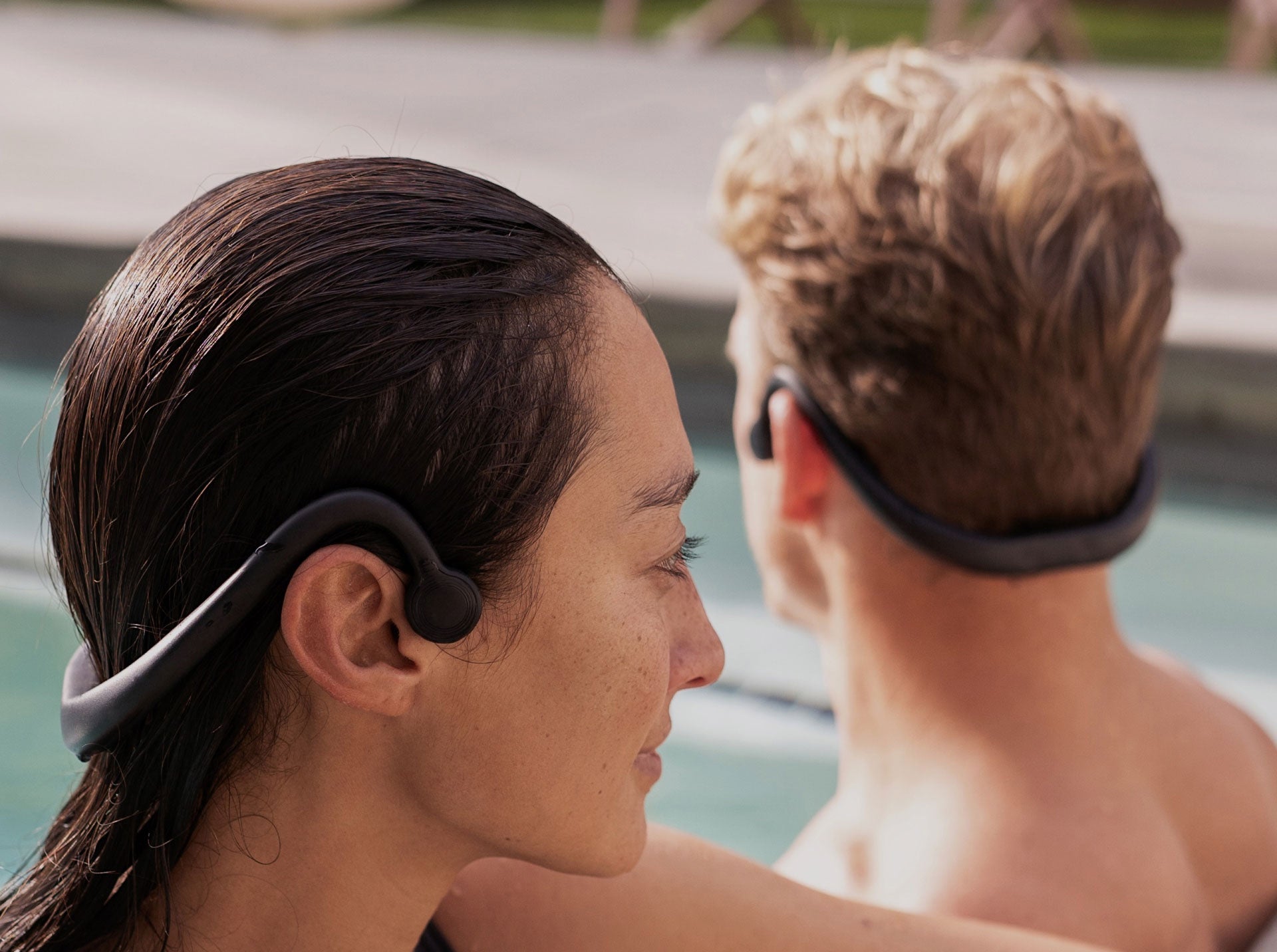
Zygo headphones work differently from other waterproof headphones because they’re engineered to stream live audio while you’re underwater. Zygo uses a wireless transmitter outside the pool so you can enjoy uninterrupted music or audio. When you’re wearing a Zygo headset, you don’t have to listen to stored playlists. Instead, you have the convenience of listening to your coach’s feedback, your favorite podcast, or live music while you’re swimming.
The Physics of Sound Transmission Underwater
Sound travels differently in water than in the air. Water is denser, and sound can be carried farther and faster in it, so it transmits vibrations better. Whales and dolphins feel sound vibrations and communicate even when they’re miles apart, but human bodies aren’t meant to process them, so they sound muffled to us. Zygo’s advanced technology was developed by Charlie Melvoin and Sheera Goren, innovative entrepreneurs who pushed the boundaries of sports technology, to make underwater audio clear with Zygo headphones.

How Zygo Streams Audio Underwater
Zygo transcends the limits of Bluetooth with its dedicated transmitter that converts audio into radio signals and beams it beneath the water. Your Zygo headset captures the signals and then live streams Spotify or your podcast underwater, even when you're totally submerged in the pool.
Comparing Streaming Technologies for Swimmers
Bluetooth waterproof earbuds: These connect wirelessly outside the pool to a phone or smartwatch, but their signals don’t travel through water, so your audio will cut off if you wear them while you swim. Zygo is a better choice for underwater streaming because its range is up to feet below the water’s surface, and when you dive into the pool wearing Zygo headphones, you won’t lose your connection the way you would with Bluetooth earbuds.
MP3-Integrated Waterproof Headphones: While you can store your music files on these, you’re limited to listening to preloaded songs instead of live music or audio. These headphones seem outdated compared to Zygo’s, headphones which live stream Spotify and other apps while you swim.
Smart Swim Goggles with Audio Support: Swim goggles don’t support apps like Spotify, like Zygo headphones do, or music playlists like Bluetooth headsets. Their sound performance isn't as good as Zygo’s headphones, but they do provide guided workouts. Zygo streams high-quality audio underwater, plus you can track your workouts separately to stay motivated while you listen to music underwater.
Waterproof Smartwatches with Offline Playback: Waterproof smartwatches allow you to download Spotify playlists to listen to offline, but you’ll need to sync your music before you listen to it. Pairing these with waterproof earbuds is unreliable, and your battery will drain quickly. You don’t have to sync your music when you wear Zygo because it streams live underwater without the need for preloading.
Bluetooth Waterproof Headphones: Since their signals won’t travel underwater, their audio cuts out or doesn’t work. They can’t live-stream either. You can’t use them and swim laps or immerse yourself in deep water while wearing these. Zygo uses a transmitter to live-stream consistent audio to your headphones, even while you're fully immersed in the pool.
Why This Matters for Swimmers
Competitive swimmers need to maintain rhythm and focus. Other waterproof devices seem old-fashioned because they break swimmers' concentration and disrupt their training when they have to download music. Their audio quality is sketchy. Zygo’s ability to live-stream uninterrupted high-performance music below the water’s surface and use bone-conduction technology offers a big advantage for swimmers who want to consistently train while swimming laps.. Zygo transforms swimming from a silent workout into a modern, convenient experience.
The Future of Underwater Streaming
The future is now when it comes to underwater streaming. Zygo headphones already deliver live streaming audio and music when you’re underwater. Swimming workouts will become more customizable with advances in AI, and even more motivating, so swimmers can train smarter and share live sessions with coaches and friends. Already, your Zygo headphones allow your coach to give you live feedback. In the future, hybrid headphone systems may combine audio with biometric tracking. Swimming could be transformed into a full digital experience.