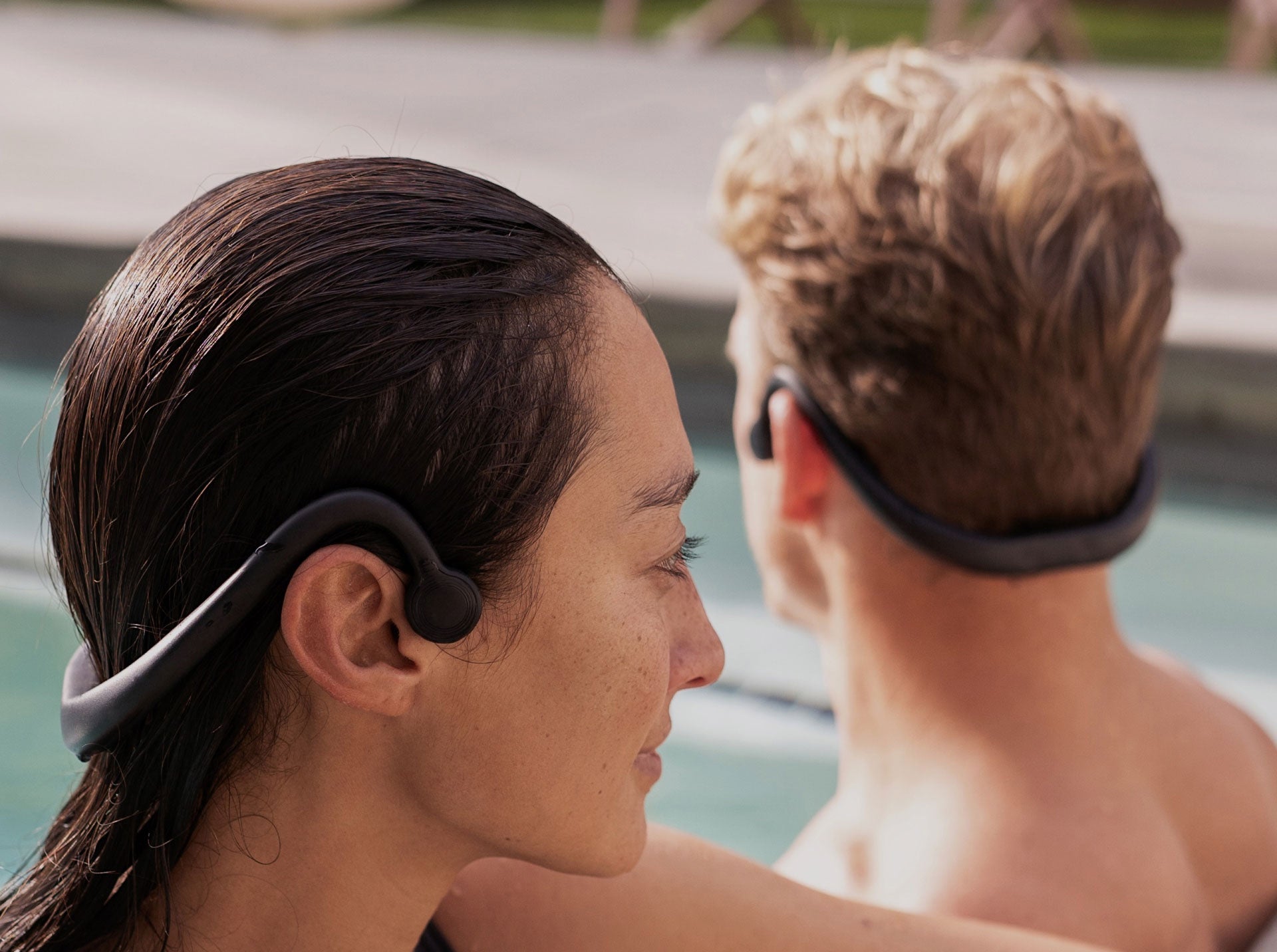

For decades, runners, cyclists, and gym-goers have relied on music to push through tough workouts. Swimmers, however, have largely been left out of the equation. Water creates unique challenges that make traditional headphones ineffective, leaving many athletes to train in silence.
Today, that is changing. Advances in underwater audio technology have made it possible to use music for swim training in ways that were previously impossible. Whether you're working through long endurance sets, preparing for a triathlon, or simply trying to stay motivated during lap swimming, the right audio can transform your experience in the pool.

The connection between music and endurance is backed by sports science. Music influences perception of effort, pacing, mood, and focus, helping athletes train longer and more consistently. Combined with modern underwater audio systems, swimmers can now access the same motivational advantages athletes in other sports have enjoyed for years.
How Music Helps Swimmers Build Endurance, Rhythm, and Motivation
Swimming is as much a mental challenge as it is a physical one. Long sets can feel repetitive, especially during endurance-focused training sessions. When swimmers lose focus, workouts often feel harder and fatigue sets in faster.
Music helps solve this problem by providing a steady source of stimulation and engagement. Instead of counting laps or staring at the pool floor, swimmers can direct attention toward rhythm, tempo, and audio content that keeps them mentally engaged.
Many swimmers report that listening to music allows them to:
-
Stay focused during longer workouts
-
Maintain a consistent pace
-
Reduce perceived exertion
-
Increase workout enjoyment
-
Improve training consistency
-
Feel more motivated to complete challenging sets
When training becomes more enjoyable, athletes are more likely to stick with it over time. That consistency is one of the biggest factors in long-term endurance development.
What the Science Actually Says About Music and Athletic Endurance
Researchers have spent decades studying the relationship between music and athletic performance. While music does not magically make athletes stronger, it can significantly influence how hard exercise feels and how long athletes are willing to sustain effort.
The Dissociation Effect: How Music Redirects the Brain During Hard Effort
One of the most studied benefits of exercise music is known as dissociation.
During intense exercise, the brain constantly monitors signals related to fatigue, discomfort, and effort. Music competes for attention, reducing focus on these sensations and making exercise feel less demanding.
For swimmers working through difficult aerobic sets, this can be especially valuable. Instead of concentrating on fatigue, athletes can focus on rhythm, lyrics, or the content they are listening to.
The result is often improved endurance and a greater willingness to continue training when workouts become challenging.
Tempo Synchronization and Stroke Efficiency
Music tempo can also influence movement patterns.
Many athletes naturally synchronize their movements to musical rhythms. In swimming, this may help reinforce stroke timing and pacing during steady-state training sessions.
While swimming mechanics should always remain the priority, music with a consistent tempo can help swimmers establish a rhythm that supports more efficient movement through the water.
For endurance-focused workouts, maintaining a consistent rhythm often leads to better energy management and improved performance over longer distances.
The Mood and Motivation Mechanism
Music also influences emotional state.
Motivating songs can increase excitement before a workout, improve mood during training, and help athletes maintain a positive mindset when fatigue begins to accumulate.
This psychological benefit should not be underestimated. Endurance training often requires athletes to spend long periods performing repetitive movements. Music provides stimulation that can make these sessions more enjoyable and sustainable over time.
Why Swimming Has Always Been the Hardest Sport to Add Music To
Although music benefits athletes across many sports, swimming has historically faced significant technological barriers.
The Physics Problem: Why Bluetooth Fails Underwater
Most wireless headphones rely on Bluetooth technology.
Unfortunately, Bluetooth signals do not travel effectively through water. Even a few inches of water can disrupt the signal, making traditional wireless headphones unreliable for swimming.
This limitation is one reason swimmers have struggled to find the best underwater music player for swimming. Many products claim to work in water, but few offer a practical solution for real-time listening.
Modern swim-specific systems overcome this challenge by using dedicated transmitters and underwater communication technology specifically designed for aquatic environments.

The MP3 Problem: Pre-Loading Playlists Is a Training Barrier
For years, most swim headphones relied on built-in MP3 storage.
While functional, these systems create friction. Swimmers must download songs, transfer files, manage storage limitations, and update playlists manually.
This extra effort becomes a barrier to consistent use.
When athletes search for ways to improve endurance for swimming, consistency is often the answer. If accessing motivating audio feels inconvenient, many swimmers simply stop using it altogether.
Real-time streaming removes this obstacle by allowing athletes to access the content they already enjoy without constantly managing files.
The Comfort Problem: How Waterproof Headphones Have Failed Swimmers
Comfort has also been a major challenge.
Traditional waterproof headphones often rely on earbuds that can become uncomfortable during longer workouts. They may loosen during flip turns, interfere with swim caps, or create pressure inside the ear canal.
Many swimmers eventually abandon these devices because they distract from training rather than enhance it.
Modern bone conduction systems solve this problem by delivering audio through cheekbones rather than inside the ears, creating a more comfortable experience during extended swim sessions.
How to Structure Your Swim Training for Maximum Endurance Gains With Audio
The right audio can support endurance development when paired with an effective training plan.
Warm-Up Sets
During warm-up sets, choose content that helps you settle into the workout.
Many swimmers prefer:
-
Relaxed music
-
Podcasts
-
Guided training sessions
-
Technique-focused coaching audio
The goal is to establish rhythm and prepare mentally for the work ahead.
Main Set
The main set is where audio often delivers the greatest benefit.
Higher-energy music can help maintain focus and motivation during:
-
Aerobic endurance intervals
-
Threshold sets
-
Distance swimming
-
Triathlon training sessions
Matching workout intensity with audio energy levels can help sustain engagement throughout the session.
Cool-Down
During recovery swimming, many athletes transition to calmer content.
This might include:
-
Slower music
-
Podcasts
-
Audiobooks
-
Recovery-focused coaching content
The objective is to encourage relaxation while maintaining movement quality.
Workout Structure Template
A simple endurance-focused workout might look like:
-
400-yard warm-up
-
8 x 100 moderate effort
-
4 x 200 endurance pace
-
800 continuous swim
-
200 easy cool-down
Using audio throughout the workout can help maintain focus and reduce the mental fatigue associated with longer sessions.
Choosing the Right Audio for Your Swim Goals
Different types of audio serve different training purposes.
Music
Music remains the most popular option for swimmers seeking motivation.
Benefits include:
-
Increased energy
-
Improved mood
-
Better pacing
-
Enhanced enjoyment
-
Reduced boredom
Music is particularly effective during interval sets and endurance sessions.
Podcasts and Long-Form Audio for Distance Swimmers
Distance swimmers often benefit from podcasts, audiobooks, and longer-form content.
Because these workouts involve sustained efforts over extended periods, engaging audio can help pass time more quickly while maintaining mental focus.
Many swimmers report that long-form content makes lengthy training sessions feel significantly shorter.
Coaching Audio: The Emerging Frontier
One of the most exciting developments in swimming technology is real-time coaching audio.
Instead of waiting until the wall for feedback, swimmers can receive guidance during the swim itself.
This creates opportunities for:
-
Immediate technique adjustments
-
Improved pacing
-
Better workout execution
-
More efficient skill development
As underwater communication technology continues to evolve, coaching audio is becoming an increasingly valuable training tool.
What to Look for in an Underwater Music Player for Swim Training
Not all swimming audio systems are created equal.
Live Streaming vs. Pre-Loaded MP3
Modern swimmers increasingly prefer streaming solutions because they eliminate the need for file management.
Benefits include:
-
Instant access to favorite content
-
Unlimited listening options
-
No playlist transfers
-
Easier workout preparation
Bone Conduction vs. In-Ear Waterproof Headphones
Bone conduction technology offers several advantages:
-
Greater comfort
-
Better swim cap compatibility
-
Reduced ear fatigue
-
Secure fit during turns and push-offs
For many athletes, this creates a more natural listening experience.
Transmitter System vs. On-Device Storage
Dedicated transmitter systems provide a fundamentally different experience than traditional MP3-based devices.
Rather than relying on stored files, swimmers can access live content directly from their connected devices, making training simpler and more flexible.
For swimmers seeking the best underwater music player for swimming, this distinction is one of the most important factors to evaluate.
If you're interested in learning more about the technology behind underwater audio, explore Zygo's guide on how underwater audio works.
Frequently Asked Questions About Swimming with Underwater Music
Does listening to music while swimming actually improve performance?
Research suggests music can reduce perceived exertion, improve mood, increase motivation, and help athletes maintain effort during endurance activities.
What BPM is best for swim training?
The ideal BPM depends on workout intensity. Moderate-tempo music often works well for aerobic training, while faster tempos may support higher-intensity sets.
Can you really stream Spotify while swimming?
Modern underwater audio systems can provide real-time audio streaming through specialized transmitter technology designed specifically for swimming environments.
How is an underwater music player different from a waterproof headphone?
Many waterproof headphones simply resist water exposure. Underwater music players are specifically engineered to deliver audio while submerged.
Do bone conduction headphones work underwater?
Yes. Bone conduction technology is particularly effective for swimming because it transmits sound through vibrations rather than traditional earbuds.
How do I improve my swimming endurance without getting bored?
Combining structured training plans with engaging audio content can make long workouts feel more enjoyable and sustainable.
Is it safe to use headphones in open water swimming?
Safety depends on conditions, awareness, and device design. Swimmers should always prioritize visibility, supervision, and environmental awareness.
Can swim coaches communicate with athletes in the pool using audio?
Some advanced swim audio systems allow coaches to provide real-time instruction during training sessions.
What's the difference between a waterproof rating and being truly underwater-capable?
A waterproof rating indicates resistance to water exposure, while underwater-capable systems are designed specifically to function while submerged.
How do I choose music to match my swim pace?
Many swimmers select playlists based on workout intensity, using slower tempos for recovery sessions and faster rhythms for challenging sets.
Does music help with flip turns and interval timing?
Music can support rhythm and pacing, although swimmers should continue using structured intervals and pace targets for performance development.
Can I listen to podcasts while swimming?
Yes. Many swimmers use podcasts and audiobooks during longer endurance sessions to stay engaged and mentally focused.
Swimming has always been one of the most challenging sports for integrating audio. Today, that is changing rapidly. With advances in underwater streaming, bone conduction technology, and real-time coaching systems, swimmers can finally access the same motivational advantages enjoyed by athletes in nearly every other sport.
For swimmers looking to improve endurance swimming, stay motivated through longer workouts, and make training more enjoyable, modern underwater audio technology is becoming an increasingly valuable part of the training toolbox.